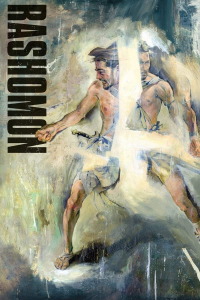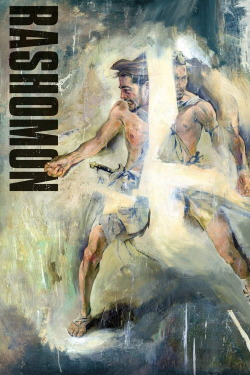
Review of Rashomon (1950) by Drew S — 25 Feb 2010
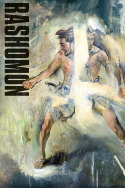
Rashomon's greatest virtue, its construction, has been strip mined over the last sixty years by every film maker ever. Not to sell it short; it is truly great, and a totally involving plot. The evolution of film is an exercise in taking the aspects that work, however, and despite Rashomon's sacred cow status in the art house, there are a lot of parts about it that no longer work.
Though it can all be chalked up to age and the fluidity of perspective on what a film should be, there are certain aspects of the movie that will hold up only for the most sympathetic of viewers. The acting is technically proficient, in that Kurosawa's cast knew what they were doing and had considerable control, but these days it looks awfully overdone.
Toshiro Mifune as the bandit Tajomaru is an embarrassment, but it is a true test of endurance to get through Machiko Kyo's incessant, unbelievable wailing. About ten minutes of this movie's 90-minute runtime is watching her cry at the top of her lungs, which is a pretty gripping character trait at first, if only through her portrayal.
But then it goes on...and on...and on. It stops building the character eventually, and unless Kurosawa's intention was to bug the shit out of the viewer, the overactive framing of his actors is one of the aspects of Rashomon that hasn't come out so well.
The second problem is a consistent one in Kurosawa films - the man is SO FUCKING OBVIOUS with his themes. It's like he's writing the script in crayon. There's no breathing room for implication or subtext here, when Kurosawa is all but spilling his intentions and secrets through the mouths of his characters.
If you weren't sure as to what the movie was about for the first hour and ten minutes, the nonstop morality monologuing will be sure and clear that up for you in the final ten. Again, this is more a reflection of the times than an immediate and remediable weakness in the film itself, but there's little stimulation to be found within the film's writing.
Distinct and innovative, Rashomon makes for a decent mystery, but as modern entertainment or even a deep film, it's not much of an investment anymore. It's not that its problems make it difficult to appreciate, but for a classic, it's pretty easily left in the dust in some regards.
Kurosawa's efforts hold up best in his assembly of the movie. His vision is clearly meticulous, especially demonstrated through the stunning cinematography, and though some aspects don't hold up as well as others it is still a significant film for any avid fan of the medium.
This review of Rashomon (1950) was written by Drew S on 25 Feb 2010.
Rashomon has generally received very positive reviews.
Was this review helpful?