Review of Barry Lyndon (1975) by Paul Z — 20 Apr 2009
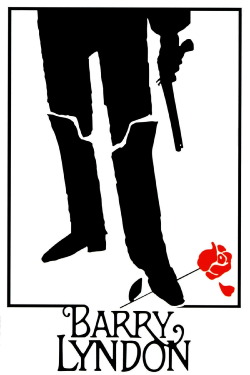
Some people find Barry Lyndon a unique, as a result of being remote, effort in a sort of transcendental film-making. Others find it a pretentious flat tire. I shake my head at the latter view. How can anyone be bored by such a daringly resolute film, unless they've become such sleepy filmgoers that no movie can make an imprint on them unless it complies to their expectations? Stanley Kubrick's three-hour adaptation of William Makepeace Thackeray's picaresque tale, which succeeds transcendently as a film which experimented with film stock, lenses and natural lighting, may not be a great entertainment in the traditional sense, but it's a reckless augmentation of directorial clarity: Kubrick saying he's going to make this text work as a model of the way he sees the world. The chamber music saturating the soundtrack is so delicate and sophisticated yet so primitive, as is the setting and time.
This four-time Oscar-winning period film is substantially hostile in its deliberate coldness. Many of its turns take place offscreen, the cleverly opinionated narrator tending to tell us what's about to happen and we learn long before the film ends that its hero will die broke and unfruitful. This disclosure doesn't much dishearten us, because Kubrick has directed Ryan O'Neal in the title role as if he were an oil painting. He would be a dauntless man of power were he not seeing tunnel vision.
And the film has the pomposity of greatness. Aside from how much it cost, how many years it was in the making, not being the commercial success Warner Bros. had been hoping for. How many directors would have Stanley Kubrick's self-assurance in taking this body of historical history and drama, this basically small yarn of a young man's rise and fall, and completing it in an approach that ultimately bids our approach to it? We not only see Kubrick's movie, we see it in the mindset on which he demands.
His title character is a young man to whom things occur. Barry appears to take hardly any knowing charge over his life. He falls into a short-sighted adolescent love, quickly has to leave the community after a duel, enrolls just about inattentively in the British Army, fights in Europe, defects from not one but both sides, falls in with significant and shady compadres, marries a woman of affluence and charm and then devastates his own world because he misses the morale to endure in it. And all of these things feel capricious. Young Lord Bullingdon, Lady Lyndon's son by Sir Charles, despises Barry from the start. The marriage is not a happy one, yet they celebrate a new son. Barry enjoys himself and philanders whilst keeping Lady Lyndon in apathetic isolation.
The key is that the Baroness's son is another Redmond Barry. We're reminded of the righteous renegade young Barry. And we see through the depictions of the world around him that conquering was the inclination to acquire love. He was conquered as a young Irishman, as the rejected third of a love triangle, thus his likewise response was to conquer one's rivals, which heightens the intensity of the Baroness's pain and desperation when she is subjugated by him after being of such dominant distinction. In the end, who's conquered who?
This review of Barry Lyndon (1975) was written by Paul Z on 20 Apr 2009.
Barry Lyndon has generally received very positive reviews.
Was this review helpful?