Review of The Virgin Spring (1960) by Harry W — 12 Jul 2014
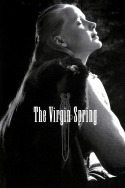
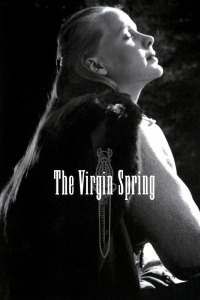
Teaming up director Ingmar Bergman with legendary actor Max Von Sydow, The Virgin Spring sounded like a collaboration of versatile talent.
The Virgin Spring is an example of a dated film. While it is a good piece, the effect of its story would not have the same effect today because in a society which reports the violent nature of rape cases left right and centre as well as depicting the dark nature of them in films, the central moment that depicts that in The Virgin Spring does not have the same dramatic impact anymore. It's understandable as the film is 54 years old, and it is enjoyable for its merits as a classic film of Swedish cinema. But there is no denying that it is a dated film, so by contemporary standards it is likely to be judged as one.
This is one of the two central scenes in The Virgin Suicides: the rape scene and the brutal moment of vengeance in the final scene. The one scene that would have more of an impact today would be the latter because there is a lot of complex depth in it stemming from how the viewers' morals affect their interpretation of the scene. The impact of the actual moment is not all that powerful because, again, the film is dated. But the meaning of it remains valid. It is dramatic and is depicted very powerfully with raw violence based on clever visual traits, and it does not use complex film techniques to dramatize it. The Virgin Spring feels like a very natural film in terms of the way that Ingmar Bergman handles the drama in the story. Some may find it empty, but I found it to be mostly an atmospheric experience. There are a few scenes where a musical score echoes its way into the film gently and presents a sense of mysterious melancholy on a subtle level which means that it is a nice touch, but overall the film mainly relies simply on the natural atmosphere to build which echoes a certain sense of emptiness into the film. The musical score manages to achieve that same feeling, so it Is a nice addition to the film.
Like I said, The Virgin Spring is a dated film. It is based on a famous Swedish ballad and is extended to feature length running time yet cannot transcend the fact that it has a limited story. It manages to capitalise on the complex themes and concepts that come with it which are handled powerfully by director Ingmar Bergman. Some may find that the slow pace of the film allows things to happen rather organically and that the classical film style is one of its major benefits, the same way that others may deem it to be an overly simplistic and slow film which did not survive the battle of age. My feelings lie in the middle because while I found the premise to be thin and the development to be slow, the nature of its story was good and the drama was handled well by Ingmar Bergman even if what he was working with seemed like it was stretched for a bit much.
One of the key themes in The Virgin Spring seems to be that either directly or indirectly, humans are inherently evil. The one character in the film who is essentially all good is Karin, and that becomes her downfall because her decision to always be a good girl ends up resulting in her untimely suffering and the unfolding of a more dark society around her. It reveals how even the slightest ray of light in life can turn the world into a darker place than before, and the pure darkness in that concept is one of the reasons that The Virgin Spring is a memorable film. It has no optimism but never ends up in melodramatic territory, and the way that it balances the hardcore nature of its drama is fairly impressive.
The atmosphere in The Virgin Spring is great. Although the story itself is a simple one, the atmosphere of the film is dramatic but also natural and makes the experience unpredictable. It gives audience the perspective of the character Karin who is innocent and is just coming to terms with the nature of the world. The world seems like a strange and somewhat dark place when the film starts, and it stays on the tone as the film progresses until it makes a sudden turnaround. The drama of the film is terrific.
Visually, The Virgin Spring is also very nice because the lovely scenery of the film is captured with a lot of nostalgic cinematography while the art direction of the film echoes the time of the setting very well. It is easy to believe the story in The Virgin Spring because it is both firmly dramatic and visually realistic.
The performances of the cast in The Virgin Spring are also pretty firm. They aren't all that groundbreaking, but they make the film seem more realistic and therefore more dramatically effective. This is particularly present in Max Von Sydow who is able to make a complex and yet sympathetive figure out of his character as usual which means that viewers are able to see nearly eye to eye with him. He handles the raw drama of the film with a powerful display of human emotion, and you could expect nothing less from him. Max Von Sydow delivers a powerful performance in The Virgin Spring which proves to be essentially no challenge to him, and he delivers the language of the script so naturally that the realistic nature of the story is bound to make an impact in one way or another.
So although The Virgin Spring is a dated film with a lesser impact by today's standards, the complex nature of the atmosphere, the handling of the material by director Ingmar Bergman, the visual style of the film and the performance of Max Von Sydow manage to make up for it.
This review of The Virgin Spring (1960) was written by Harry W on 12 Jul 2014.
The Virgin Spring has generally received very positive reviews.
Was this review helpful?