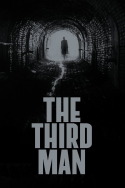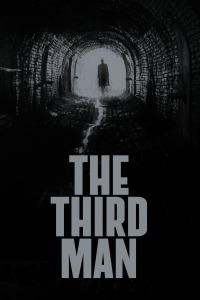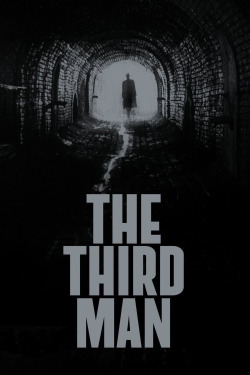
Review of The Third Man (1949) by Chas L — 15 Oct 2010
When this classic was scheduled on German TV, I didnâ??t want to miss it â?? because , as a principle, classics should never be missed, but also to be able to make more sense of Paul Verhoevenâ??s â??De vierde manâ?? (1983), based on the novel by Gerard Reve with the same title, once I get to see that (apparently, there are references to Graham Greeneâ??s work in Reveâ??s novel).
The classic status of â??The Third Manâ?? is no surprise to me: it is a dynamic story, full of suspense, intrigue, historical relevance (= the evil practices of some shady people in postwar Vienna), and even a bit of romance.
The story is approached in an interesting way in the sense that an outsider is confronted with certain peculiar facts that are dying to be brought the surface. Since the outsider is a writer (of popular fiction), the unraveling of this mystery is right up his street.
At one point he suggests he might turn all this into a novel (fiction embedded in fiction, as it were). The psychological development and the moral doubts of some of the characters are very interesting too - can or should one betray an old friend even when one realizes he has been mixed up in highly reproachable affairs? â?? this goes for both Harry Limeâ??s (Orson Welles) old friend Holly Martins (Joseph Cotton) and his girlfriend Anna Schmidt (Alida Valli).
The location adds to the storyâ??s suspense factor: since postwar Vienna was divided into four separate sectors, this meant one had to cross borders (with either real or faked passports) to be in or out of the clear.
The hide-and-seek qualities of â??The Third Manâ?? are further augmented by the artistic use of light and darkness: the shots with the shadows through the narrow streets at night and the escape routes in the sewers bring you to the edge of your seat, as does the question who this mysterious third man can be.
In a sense, the viewer is the equivalent of the protagonist, which always makes for an agreeable fiction experience, in my opinion. A final compliment is in order for the music: it is lively and cheerful, even when the events are the opposite.
And peculiarly, this works very well.
This review of The Third Man (1949) was written by Chas L on 15 Oct 2010.
The Third Man has generally received very positive reviews.
Was this review helpful?