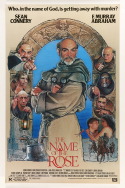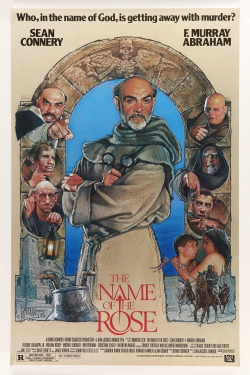
Review of The Name of the Rose (1986) by Jeremy N — 07 Jul 2008
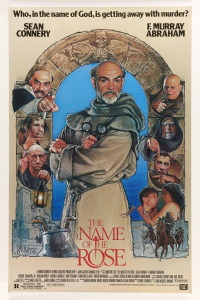
A murder mystery set in a fourteenth century monastary. Based on the novel by author, philosopher, critc, extrodinaire Umberto Eco, the story combines a love of pop detective fiction like Sherlock Holmes and Nero Wolfe, with an rigerous interest in mideval monastic ritual, philosophy, escoterica, and politics.
A young monk is killed, and before the Inquisition is summoned, Sean Connery is given a chance to crack case as a wise but contentious monk, who uses early sceintific method and deduction to reason out a case most are ready to claim as the work of the devil.
Hidden passageways, mysterious libraries, forbiden passions, and an old conspiracy, all make therye appearances without ever succombing to so many of the cleche's associated with them.
The only real problem here is that a true understanding of the films end calls for a pre-understanding of Philosophy and not just books that are written and why, but books that don't exist and what that suggests.
What if comedy is was just as important to western culture as tragedy, how would this affect our literature, philosophy, and religion, down to our daily lives of sacrifice and toil? What if laughing was as beatific as matrydom, and seriousness held in as high regard as fleeting joy. What if there were no highs and lows in culture, no or less distictions between the sacred and the profane(the story begins with the murder of a monk known for his satirical illustrations). Well everything kinda hinges on that, but it's not communicated very effectively, these ideas maks an apearance late in the script and unless you already know(SPOILER), that Aristotle's Poetics on Comedy was lost, and that we have only on the parts concerning Tragedy with which to base (for hundreds and hundreds of years, and amongst some still to this day) the absolute definition of the nature and purpose of literature and how to identify quintisentially a "good work". The birth of literary criticism and absolutism with regard to western writing.
Well the film asks the question which may be more interesting a proposition than the movie itself, still it's a fascinating intesection of genres, styles, and concepts, a torch lit labrynth of ideas and gloomy monks with magnifying glasses.
This review of The Name of the Rose (1986) was written by Jeremy N on 07 Jul 2008.
The Name of the Rose has generally received positive reviews.
Was this review helpful?