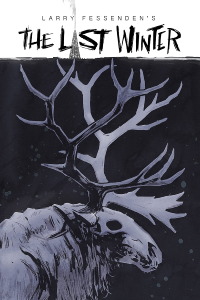
Review of The Last Winter (2006) by Nick A — 10 Nov 2011
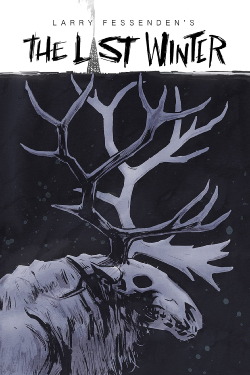
Eternity's a pretty long time. But it quickly becomes an ugly long time when one thinks about how he or she will be spending it (reincarnated, in Heaven or Hell, or in a coffin or an urn). Eternity is so undeniably boundless that the prospect of its endless duration is deeply unsettling (for most people). Nature can have that same uncomforting effect, and, when a motion picture plays off of that effect, the result can be frightening. Take, for example, Antarctica: it's a place of such magnitude and vacancy that its seemingly illimitable emptiness becomes threatening. There are certain regions of Alaska that have been forsaken as Antarctica has, lifeless and expansive plains of snowy oblivion. One of these massive voids provides the setting for The Last Winter. And director Larry Fessenden films it to terrifying results, creating an atmosphere last matched by John Carpenter's 1982 classic The Thing (which, by no coincidence, took place in Antarctica).
Within the Arctic province of Northern Alaska, gruff, hard-shelled Ed Pollack (Ron Perlman) leads an eight-person team of evaluators, which has been sent by the U.S. mainland-based oil company K.I.C. Corporation, whose intent is to survey the Northern Artic National Wildlife Refuge for potential drilling sites. But there's something in the atmosphere that doesn't want them there -- a "driving force," one character desperately explains -- and its presence is eventually felt by everyone in the group.
When the crew's youngest member, Maxwell, claims that he saw something out in the snow, then is found dead days later, fear envelopes in his associates, causing them to question their judgment and sanity. And Hoffman (James LeGros), who's employed by the government rather than K.I.C., to ensure that they're running things as they said they would, insists that he has the answer: hydrogen sulfide (sour gas), which had been frozen beneath the ice for thousands of years, is being released by the rising Arctic temperatures and, consequently, is causing hallucinations. Fessenden, who co-wrote the script with Robert Leaver, provokes intellectual attentiveness from his audience, who must form their own conclusion as the whether or not the chilling events that transpire in his film are the result of an environmental crisis or a supernatural phenomenon.
The Last Winter is unnerving for reasons beyond that which its horror conventions inspire. Its desolation is a key catalyst in its distribution of apprehension, but, for a more thematic, less cinematic reason, so is its ecological motive, which summons issues that have frequently been pushed aside in the last few years and provides the film an eerie plausibility that is seldom present in today's scare flicks. Regardless, the movie's tension would not have coiled as tautly as it did without the keen acuity of Fessenden (whose modest last effort, 2002's Wendigo, was unable to attain this film's consistency), who directs it with the awareness and craft of a master, complying only with the viewers' imagination (and not with the cliched tactics of suspense horror) to create an overpowering sense of dread (much like, though not as well as, '99's The Blair Witch Project).
The performances mold well to the tone of the film, though Perlman's typecast stubborn badass quickly grows tired and even irritating (there's no wry humor to level his willful skepticism like in Hellboy). Beyond LeGros' vacillating protagonist, the only other two characters with prominent screen time are Maxwell, who's well-played by Zack Gilford (TV's Friday Night Lights), though he merely lasts thirty minutes, and Abby (Connie Britton), one of the gang's only two women (the other is the station's cook, Dawn), who Ed has a thing for but who's in a relationship with Hoffman. You'll be hard-pressed to find a standout act from anyone in the film if you go searching, but one isn't necessary -- the film's about creating a believability that's real enough to go unnoticed and make its viewers feel uneasy, and it succeeds in both cases, and the cast and their roles are an undeniable reason.
This review of The Last Winter (2006) was written by Nick A on 10 Nov 2011.
The Last Winter has generally received mixed reviews.
Was this review helpful?