Review of Spartacus (1960) by Jake C — 27 Oct 2018
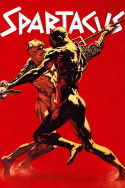
Although the film may suffer from comparison with the rest of Kubrick's oeuvre, on its own SPARTACUS stands as one of the great cinematic epics, and among the best of the sword and sandal genre, often more memorable and engrossing than modern semi-digital analogues like GLADIATOR. The excitement of the latter is also its downfall: It is a movie about spectacle, about carnal violence, which it partakes in as much it critiques, the story of a virtuous individual who must regain his rightful position of dignity, the spiritually true heir set against the corruption of the undignified usurper-a classic tale of riches to rags to riches, of the prodigal hero returned to his rightful position of power. On the other hand, the story of SPARTACUS is as much about those he inspires as it is about the man himself, a person born into slavery and who flatly rejects claims of hierarchy and power-when given the opportunity, he denies any royal bloodline and, like Cincinnatus or Washington, refuses authority beyond that which is necessary and thrust upon him, breaking the system of violence and inequity rather than trying to beat by playing the gladiatorial games. The titles illustrate this dichotomy perfectly: GLADIATOR looms large and threateningly, a role for Maximus to step into a fill as the true, Platonic, paradigmatic warrior; SPARTACUS, instead, is not only the name of the historical figure who led a slave revolt, but becomes a signifier for all who join that cause, for all of righteous heart, a name we might even claim as our own: "I am Spartacus.".
In this way, the epic continues to speak to our times: It is easy to see the scenes of the Senate and recognize the backstabbing, the corruption, the hypocrisy of our own political system; and when Crassus speaks of using his wealth to return Rome to its former glory, it is hard not to recognize the terrible parallel avant la lettre: MRGA might be the new SPQR. In its best moments, SPARTACUS achieves a brilliant synthesis of the ancient and the modern-whether America during the creeping fascism of the Red Scare and the Black List, or during the creepy fascism of the Red Caps against BLM-the epic and the personal (in its love story), the heroic and the tragic. For a story set two millennia ago and made a half-century ago, SPARTACUS still feels fresh and alive even without the benefit of added computer graphics or action choreography, because the film doesn't just put the viewer on the edge of her seat, but asks you to rise up and join the chorus in your own voice: I, too, am Spartacus.
This review of Spartacus (1960) was written by Jake C on 27 Oct 2018.
Spartacus has generally received very positive reviews.
Was this review helpful?