Review of Spartacus (1960) by Augustine H — 29 Jun 2013
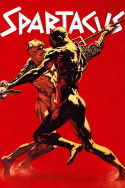
Stanley Kubrick's sword & sandal epic, Spartacus, is a film that should not be ignored as it holds an importance place in the director's catalog. This was not one of the films that introduced me to Kubrick's works and I came into this thinking it may surprise or immerse me that it would rise at the same level as my opinion on Kubrick's masterpieces. Sadly, it did not hit me with much force as I wanted it to.
The plot of Spartacus is the rise of Spartacus from the shackles of Rome's slavery. It is a story that I indeed enjoy but since the film, at times, drifts away from Spartacus (Kirk Douglas) and focuses on Crassus' (Laurence Olivier) goal for power and dictatorship of Rome, it took me out as that half doesn't hold up to the strength in Spartacus' story. It doesn't get to the point that the film becomes dull, so it is still tolerable. I felt Dalton Trumbo's script lacked interesting dialogue and sometimes doesn't create that sense of importance in what they are saying. I believe in a film like this, it is dialogue that should keep the audience invested, as it serves in supporting the plot and intentions of the characters on screen. The rivalry between Gracchus (Charles Laughton) and Crassus is very entertaining as it explores the paths of what Rome can become. It is the screenplay that holds most of the issues I have with this film and if it have been maybe revised or spent a little more time on it, this film would have been a masterpiece.
2001: A Space Odyssey, A Clockwork Orange, The Shining, Eyes Wide Shut, Full Metal Jacket, Lolita and Barry Lyndon, are films of Kubrick that I felt were all daring as they have imposed either controversy, antagonizing characters, exploratory themes and risk for low financial gain. Spartacus on the other hand was something of an epic which had extremely high expectations and was easy to market to the public. This film in his catalog definitely seems like an oddball. I felt that Kubrick did not have that creative control in this production as compared to his other projects but he did the best he could with what he had. Kubrick understood the material enough to convey what is needed to tell this tale. He also knew that this film had to be big as the story's themes of hope and freedom had tremendous weight.
As I said, this film is large and to convey that, you need to have a cinematographer who can deliver. Russell Metty showed he could handle a project this big. Metty's photography showed the scale of film and, along with Alex North's score, carried significant weight. The battle scenes are example that shows just how big the production is. Metty did not only create beautiful and large long shots but also handled the intimate moments between characters delicately. Scenes with Spartacus and Varinia (Jean SImmons) are captured with such elegance that it is at par with Metty's large ambitious shots. Metty is an important aspect in making Spartacus an epic film that rivals classics like Lawrence of Arabia and Ben-Hur.
The film's length, 3 hours and 17 minutes, is a stretch and some scenes could have been a bit trimmed. I felt that the pacing was a little on the slow side for me and with the issues of the film's script, it made it a bit more of a chore. To me, the length of a film is not the issue but rather the content within that length is what determines the necessity of longer running time. If the film explored a little more with the Senate and make it very entertaining and smartly executed then I would satisfied with the running time, maybe even longer.
The score of the film is conducted and composed by Alex North, who I recall also did the score for Cleopatra. North's score definitely has a presence in the film and screams out to be noticed but it isn't the grand moments like the battles that gets me listening but rather the intricate moments between Spartacus and Varinia that shows off a memorable tune that creates the element of romance between the two. His score definitely goes hand in hand with Russell Metty's photography and delivers something that will be remembered in the long run.
For a character to become believable, the actor must be deeply attached and understand the role that they are embodying. Kirk Douglas definitely shows that here and is one of the big reasons that makes Spartacus' cause all the more believable. While Douglas is the strongest aspect of this cast, it is not without the help of fantastic supporting actors like Charles Laughton, Jean Simmons, Peter Ustinov and Tony Curtis. They really connected with their characters and brought their A-game to the film. The downside of the cast is sadly, Laurence Olivier. Olivier brought as much as he could with the character Crassus but the character is written so thinly that it Olivier couldn't show off his abilities. There is one seen which I thought explored the character Crassus for a bit, and that was the restored scene of him in the bath being washed by Antonius (Tony Curtis).
The film has it's weak point but it doesn't place the film as the weakest of Kubrick's films or even within that decade or genre as it is solidified it's classic status with it's iconic score and photography, strong story, and a powerful cast.
This review of Spartacus (1960) was written by Augustine H on 29 Jun 2013.
Spartacus has generally received very positive reviews.
Was this review helpful?