Review of Scarlet Street (1945) by Matthew Samuel M — 16 Jul 2014
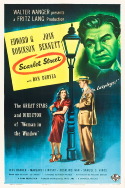
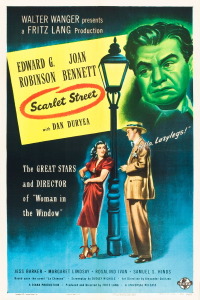
As he did in other subversive, later-life productions such as "The Big Heat" and "Rancho Notorious", Fritz Lang brings his pessimistic view of humanity to bear on a story (taken from a French novel) that might have otherwise unraveled with the obligatory dispensing of justice and American moral certitude prevalent in Hollywood film at the time.
The Edward G. Robinson character is a painful study in emasculation and loneliness; the deception he suffers at the hands of the Joan Bennett and Dan Duryea characters is almost startling for their unbending remorselessness towards him (especially hers -- no third act change-of-heart scenarios to be found here).
It is that willingness of Lang's to follow the story all the way to its logical, devastating conclusion (unlike in "Ministry of Fear") that makes "Scarlet Street" so impacting.
Is it one of the director's best? Not really. The set-up is too slow and labored, and the performances of the three principals (and that of Robinson's wife) are too broad at times. But it builds as it goes and the pay-off is a doozy.
In one masterfully handled transition, Lang sets you up to expect the usual cliché of a last-minute reprieve for one character hand in hand with the self-sacrifice of another, then yanks the rug out and we're brought to a far more wrenching conclusion.
It is a very good film.
This review of Scarlet Street (1945) was written by Matthew Samuel M on 16 Jul 2014.
Scarlet Street has generally received very positive reviews.
Was this review helpful?