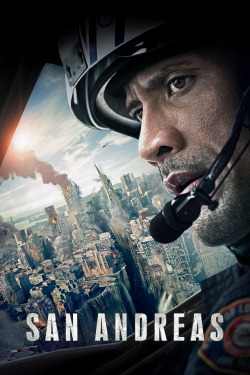
Review of San Andreas (2015) by Amy C — 14 Oct 2016
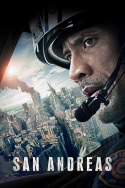
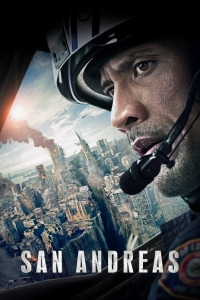
Drop and take cover, it's an earthquake! Most experts will warn people to stay low, inside, and cover your head. Movie audiences will certainly need to cover their heads if they plan to sit through San Andreas. This could have been a riveting movie about survival and death during a series of catastrophic quakes that hit California. Also, add in the potential heroic actions of first responder Dwayne "The Rock" Johnson and San Andreas most certainly would have been epic. Instead, it is a hokey, unrealistic, over the top movie that trades gasps of horror and suspense for uncontrollable laughter. This movie falls short with physically impossible rescue scenes, incredible overacting, and the visually omitted dead or injured. It can be better compared to a fairy tale than a realistic earthquake experience. San Andreas is an absurd disaster movie because of the unbelievable plot.
Without a doubt, the rescue scenes are physically impossible to justify. The worst offender was when Emma Gaines, played by Carla Gugino, was trapped on the top of a partially destroyed burning skyscraper. Her husband, Ray (Dwayne Johnson), came to her aid in a rescue helicopter. Emma was having lunch at a hotel in Los Angeles when the first quake hit. Ray coincidently called her cell phone minutes before the impending disaster. He ordered Emma to go to the top of the building so he could save her. As the sole survivor, Emma made it to the roof, only for the floors to collapse underneath her. Portions of the building crack and disintegrate, but she remains and holds on for Ray. Why didn't Emma die after falling story after story? She defies human strength and stamina. When the building starts to fall apart, why doesn't Emma fall with it to her certain death? It is movie magic that keeps her on that one piece of remaining building. During the attacks of 9-11, not a single human survived such a similar fate. How did Ray maneuver his helicopter amidst tumbling skyscrapers that were spewing debris everywhere? It was a contrived miracle that none of this struck his copter. Buildings were falling with concrete and glass flying. Fires and smoke was filling the sky, but Ray was somehow able to visually locate his wife in all this mayhem. Not even the most experienced pilot could conceivably perform such a feat. At the same time, a stunned and bruised Emma was equally able to use her super human strength to jump into the rescue basket just before the final remnant of the skyscraper shears away. Does the director, Brad Peyton, think the audience is so gullible to buy this sequence of events? This can only happen in Hollywood and is laughable and impossible to believe for anyone with half a brain.
Even more unbelievable was the fact that there were no glimpses of the dead and injured. Through two separate quakes and even a following tsunami, thousands and maybe millions of Californians were certainly injured or killed. They were either swept away by the floods, fall to an unimaginable death in the rubble of buildings or bridges, or are sucked into an abyssal trench. While Ray and his family were battling the forces of Mother Nature, there were no images of the dead left behind. Dead and injured should litter the streets and float among the wreckage. It seems as though they just disappeared. Screams for help from blood soaked victims should have been seen in the aftermath. Firemen, policemen, and rescue squads should realistically have been aiding the critically injured or accessing the dead. Max Weiss agreed when he wrote, "I kept thinking: Where are the bodies? Bigger, in this case, means more widespread death. But this is the tidiest disaster ever: Skyscrapers collapse, streets are flooded, and the Golden Gate Bridge buckles into the bay, but not a single corpse is shown" (Weiss). He is most certainly right. The body count is very high in this film but not one could be counted. Statistically, it just doesn't make sense. The dead just didn't vanish into thin air. It may be true that some might have been trapped beneath the rubble or washed out to sea, but where are the rest? This was a massive disaster like no other the United States had ever seen. Monumental property damage and the environment ripped apart without a single dead body left behind. How fake and preposterous for the audience to believe that all this humanity just disappeared!
Further to underscore the weak plot was the incredible overacting. Seismologist and professor Dr. Lawrence Hayes, played by Paul Giamatti, pleaded for the people of California to take heed after the initial quake which was centered in Nevada. A bigger one was yet to follow. After hacking into television broadcast networks, his panicked warnings only made things worse as there was really nowhere for anyone to go. His request for everyone to "Pray for the people of San Francisco" (Giamatti) was truly pretentious. Max Weiss acknowledges that, "Certainly Paul Giamatti, playing the seismologist who predicts the giant quake in advance, hams it up with even more than his usual helping of flying spittle" (Weiss). It was outlandish for anyone to believe that during a seismic catastrophe of this magnitude that only one expert would accurately predict and cover the event. The San Andreas Fault is likely the most studied and followed fault line in the United States. Surely, the entire scientific seismic community would have detected precursor tremors. After the first earthquake in Nevada, every seismologist in the United States would have jumped on the opportunity to investigate the cause and without a doubt predicted the devastating San Francisco quake. The implausible stance that it was only Dr. Hayes who accurately predicted the massive earthquake was a farce. Of course, he was there to save the day by hacking into CNN to warn the poor people of California of their fate! What an outlandish over the top portrayal of a professional who offered no advice or instruction. As the big quake hits, he frantically jumped under his desk as if it was really going to protect him from injury during the largest quake in United States history. The audience will only pray for Dr. Hayes to get control of his emotions and stop the seismic grandstanding.
For all this, some movie goers might challenge the criticism of San Andreas's far-fetched rescue scenes. They claim to actually enjoy watching the action and become overwhelmingly riveted. After all, they are there to see The Rock save the day! This is supported by Rebecca Murray when she stated, "Nothing makes sense, yet it's possible to overlook all of this ridiculousness because you're busy rooting for The Rock to save his family" (Murray). Movie audiences do not buy overpriced tickets to sit and evaluate the accuracy of every movie. They come to be entertained, shocked, and tantalized. They want Ray to overcome any obstacle placed before him. Where would the movie's plot go if Ray died when his helicopter was pulverized by a chunk of falling building? Emma would not have been rescued in time and also die in the destruction. How would their daughter, Blake, be rescued from a perilous fate in San Francisco? Those critics would argue that the whole storyline would end if not for the epic rescues. It may be easy to agree with this theory if movie goers accept every image placed before them. However, most want some semblance of reality. This is what director, Brad Peyton, threw in the laps of audiences as they watched Ray and his family outsmart, maneuver, and dodge falling skyscrapers, fires, hurling debris, and ravenous floods. They never panic and seem to always make the right decision in the face of disaster. It was an insult to audiences' intelligence to assume that they would believe that one family could survive every imaginable horrific situation and come out unscathed. Some gladly embrace this theory and evidence of realistic survival but most will certainly laugh at the idea of triumph in insurmountable obstacles.
At the same time, applauders of the movie San Andreas will defend superb performances of strong intelligent women and overlook the dismal acting of many of the main characters. One example would be Ray's daughter, Blake, played by Alexandra Daddario. She never shed a tear or uttered a scream of desperation. She had the same drive and determination to survive as her famous father. They would defend her spot-on portrayal of a young woman bravely leading herself and her newly found friends to the highest point in San Francisco. Things didn't work her way but she refused to give up and held on for dear life. Indeed, this argument is supported by Rebecca Murray when she stated, "It's also both surprising and refreshing in a movie of this sort to see the daughter isn't the standard damsel in distress and instead smart, fast-thinking and capable of taking care of herself rather than relying on someone to save her. In fact, she leads the way and saves her friends from making the wrong choices multiple times" (Murray). Yes, she was heroic and not the sub-sucking example of seismologist Dr. Lawrence Hayes. Yet, her performance was another example of extreme overacting. What teen girl would not cave in and come unglued during one major calamity after another. Where does she get the knowledge and wisdom to conquer every obstacle that literally falls or flows her way? This is not a typical teen's reaction to disaster in any semblance. Blake's classic over-baked, strong-willed, and bogus character was a perfect example of unbelievable overacting at its finest. Her reactions are trumped up in the mind of director, Brad Peyton, and vomited on the screen for the audience to endure.
Finally, it is obvious that San Andreas won't win over audiences for its dramatic and realistic depictions of earthquake ravaged California. It is a disastrous disaster movie. If the audience is there to see the outlandish antics of "The Rock", then this is their movie. Fans of imploding buildings, floods, and helicopter stunts will also probably ignore the stupid beyond belief plot. The other ninety-five percent of movie audiences will laugh and at the same time be angry that they wasted their money on a ticket. Please, don't be in that group. Avoid spending time and money watching San Andreas at all costs!
This review of San Andreas (2015) was written by Amy C on 14 Oct 2016.
San Andreas has generally received mixed reviews.
Was this review helpful?