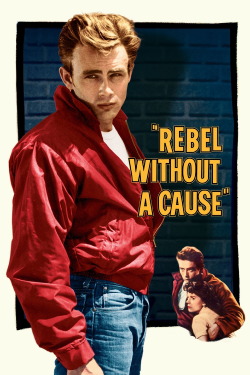
Review of Rebel Without a Cause (1955) by Omar K — 16 Sep 2015
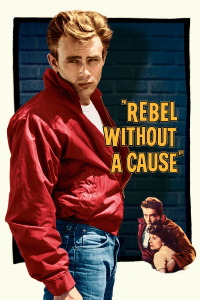
Youth culture in the 1950â??s is very much a precursor of youthâ??s todayâ?¦ you could possibly make that statement with any other decade leading up today, but the 50â??s in particular was marked by a new era of life after the apocalyptic World War II, as youthâ??s grappled with life in a way that was never seen before. Youthâ??s would rebel by chilling in gangs, by wearing a particular attire to stand out, arguing with oblivious parents and proving theyâ??ve got cojones through a life and death situation. And who better to helm a film in the 1950â??s regarding youth culture than James Dean, the icon of youth. Rebel Without A Cause is considered significant to cinema thanks to its powerful societal commentary, but Deanâ??s death even before the film was released has always made the film his in a way. His death simply concreted himself within youth history because he died at a time where his career was just about blossoming and his roles were getting juicier and more to the core of the problems facing youthâ??s in the 1950â??s. But what is more important with Dean is his social prominence, for what he represented in 1955, a disenfranchised young man with a voice, has become his legacy.
Rebel Without A Cause revolves around Jim Stark, a young man who constantly moves around with his parents; a controlling mother and cowardly father he doesnâ??t get along with. Jim struggles to fit in in his new school as he gets into a fight with a bunch of delinquents resulting in an accidental death. Suffering from guilt, Jim wants to confess but the delinquents are after him and his parents donâ??t listen to him. Mentally feeble, he takes refuge for a night in an abandoned mansion with his two unlikely friends, Judy and Plato, who like him are struggling at home. Rebel Without A Cause may have an obvious plot, but in all honesty it isnâ??t about what happens, it is about how these characters feel for the film is a stinging piece of social commentary.
This is a film about youngsters, but it does not appear to be for the same people, as adults will find the film far more shocking seeing as it comes from the perspective of the youth. James Dean leads the youthful cast with a classic portrayal of youth in revolt as his anger and desperation is both physically and mentally palpable. The thing is that Dean has only ever had three roles in his life, and all while he was young, so he is kind of an icon for the youth because he died at 24. His appeal came about because he was the poster boy of youthful disenfranchisement, and in Rebel Without A Cause, he gives a voice to those marginalised with a quite frankly stirring performance. Natalie Wood stars as Judy, Jimâ??s love interest who is also a rebellious daughter in her own right. Wood may be remembered for West Side Story, but her enactment of a girl that bows down to peer pressure to fit in and wants her fatherâ??s loving attention even though she has passed that â??little girlâ?? age, is one that truly catches the eye. Her situation both within her family and amongst her friends is possibly the most accurate representation of youth, and Wood is the reason why this realism is apparent. Sal Mineoâ??s performance as the good-hearted but overly obsessive Plato threatens to derail your sympathy for his downfall. The most obvious thing one can remember of Plato is his face of utter excitement that Jim is paying attention to him, revealing to us his sole want of a friend, which makes his collapse tragically affecting even if he leaves you divided over his character.
Through the many relationships Jim is involved in throughout the film, we get to understand the crux of Jimâ??s struggles and the obstacles that prevent him from living a better life. His romantic relationship with Judy is interesting for when he meets Judy alone she is lovely, but as soon as her friends arrive, she changes into a viciously uncaring prima donna. Everyone knows what is up with her, including Jim, which makes his romantic peeling of her peer-pressure-induced-façade all the more convincing. The stud battles between Jim and the delinquent Buzz, where they engage in a knife fight, which leads to a Chickie Run, resulting in Buzzâ??s accidental death is revealing of both the immaturity of young people, yet through Jim the maturity of facing up to these actions. And, Jim, Judy and Platoâ??s friendship triangle is short-lived and to be honest quite awkward, but what these three have in common, family problems, binds them together as unconventional companions. They all need someone they can talk to that suffers the same problem, and they for a little while get to do that. It really is stark stuff, for their problems are there for all to see, but for no one to actually listen or care. Through these relationships, Jim Stark still lacks a purpose and is forced to rebel in order find a cause for his life. And by the end, through such an unfortunate situation, he may not have found his purpose amongst society, but he definitely means something now to some people.
It is Jimâ??s relationship with his parents that outlines itself as the most burdening part of Jimâ??s life. It is in the most stressful moment of the film where this relationship is amplified to a psychical level. Jim stands in between his parents on the stairs landing, cursing and ranting about how he must do right for once in his life by going to the police to confess his part in the death. This scene is so powerfully shot as the power struggle is there for all to see, with Jimâ??s controlling mother standing on the stairs and his father sitting dejectedly on a ledge, and Jim stuck in the middle struggling to say anything meaningful for his parentsâ?? ears, resulting in him attacking his father for being a blithering coward of a role model. Only the ending resolves their relationship for his father grows some balls and takes responsibility. This family relationship is so authentically fractured that many people could perhaps still relate to it today if it wasnâ??t for the melodramatic nature of cinema in the 50â??s. Rebel Without A Causeâ??s realism is without a doubt its undying feature for the filmâ??s focus on one manâ??s life and his relationships have developed necessary social commentary that has remained relevant to youthâ??s even today. Without James Dean, Rebel Without A Cause would undoubtedly have lost its appeal for Deanâ??s everlasting youth has made the filmâ??s worldwide significance endure.
The Verdict:
Held together by a talentedly youthful cast, Rebel Without A Cause is a powerfully significant representation of generational conflict and youthful marginalisation that has becomes a timeless piece of social commentary.
â??â??â??â??â??â??â??â??â??â?? 8/10.
This review of Rebel Without a Cause (1955) was written by Omar K on 16 Sep 2015.
Rebel Without a Cause has generally received very positive reviews.
Was this review helpful?