Review of Rashomon (1950) by Ricardo O — 09 Aug 2012
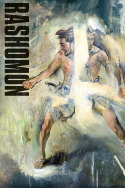
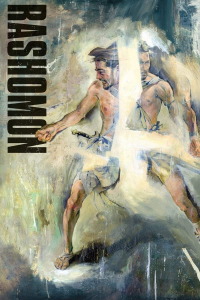
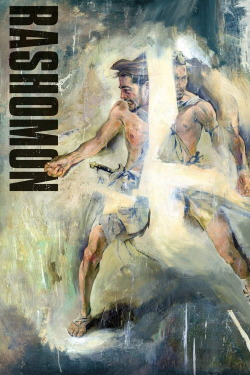
Rashômon is a film that depicts the rape of a woman and the apparent murder of her husband, a samurai, through the accounts of four witnesses, including: the bandit/rapist, the wife, the dead man through a medium, and a final account told by a woodcutter, the one unbiased witness.
The film opens on a woodcutter (Takashi Shimura), and a priest (Minoru Chiaki), sitting beneath the Rashômon gate to stay dry in a downpour. A commoner joins the two beneath the gate and they tell him they've witnessed a disturbing story and begin recounting it to him. The woodcutter claims that he found the body of a murdered samurai three days earlier while looking for wood in the forest and states that when he discovered the dead body he fled in a panic to notify the authorities. The priest says that he saw both the samurai and the woman traveling that same day the murder happened. Both men were then called upon to testify in court and there they met the captured bandit Tajômaru (Toshirô Mifune), who claimed responsibility for the rape of the woman and the murder of the samurai. Tajômaru claims that he tricked the samurai to get off the mountain trail and follow him to where he claimed there was a cache of ancient swords he had discovered. In the grove where the swords were supposed to be located, he ties the samurai to a tree and then brought the woman there. Initially she tries to defend herself with a dagger, but was eventually seduced by him, as he claims. Filled with shame, the woman begs him to duel to the death with her husband so that she may be saved from the guilt and shame of having two men know of her dishonor. With honor Tajômaru sets the samurai free and duels with him. In Tajômaru's recollection they fought skillfully and fiercely, claiming they crossed 23 times (more than any other previous time), but in the end Tajômaru was the winner and the woman ran away during the fierce battle. He is asked by the court about an expensive dagger owned by the samurai's wife: he claims that, in the confusion, he forgot all about it and that it was foolish of him to leave such a valuable object behind. The samurai's wife (Machiko Kyô)Â?, tells a very different story to the court where she says that Tajômaru left after raping her and begged her husband to forgive her, but he would simply look at her coldly. She then freed him and begged to him to kill her so that she would be at peace. He continued to stare at her will the same look of loathing which disturbed her so much that she fainted with the dagger in hand. When she awoke she found her husband dead with the dagger in his chest. She claims she attempted to kill herself, but failed in every attempt. After the court hears the story of the woman they then hear the story of the deceased samurai (Masayuki Mori), told through a medium. The samurai claims that after raping his wife Tajômaru asked her to travel with him. She accepted and asked Tajômaru to kill her husband so she would not feel the guilt of belonging to two men. Shocked by this request, Tajômaru grabbed her and gave the samurai a choice of letting her go or killing her. The dead samurai states that, "for these words along, I was ready to pardon his crime." The woman then fled and after attempting to recapture her, gave up and set the samurai free. The samurai claims that he then killed himself with his own dagger; it is later revealed that somebody removed the dagger. Back at RashÃ...Â?mon gate, the woodcutter explains to the commoner that the samurai's story, along with the other two stories, were lies. The woodcutter claims that he had actually witnessed the rape and murder but did not want to get involved at the trial. According to his story, Tajômaru begged the samurai's wife to marry him, but the woman instead freed her husband. Initially, the husband was not willing to fight Tajômaru, saying he would not risk his own life for a spoiled woman, but the woman then criticizes them both, saying they were not real men and that a real man would fight for a woman's love. She then urged the men to one another, but then hid her face in fear once they raise swords; the men, too, were visibly fearful when they begin their fight. They began a duel that was much more pathetic than Tajômaru's account of their "skillful and fierce" battle had been made to sound with Tajômaru ultimately winning with luck. After some hesitation he killed the samurai while the woman fled in horror. Not being able to capture her, he took the samurai's sword and left the scene. When the woodcutter is finished with his story, he, the priest and the commoner are interrupted from their discussion of the woodcutter's account by the sound of a crying baby. They find the abandoned baby in a basket, and the commoner takes a kimono and an amulet that have been left as good luck for the baby. The woodcutter scolds the commoner for stealing from the abandoned baby, but the commoner chastises him. Having deduced that he in fact stole the dagger from the murder scene, the commoner mocks him, "a bandit calling another a bandit". The commoner leaves the castle gate, claiming that all men are only motivated by self-interest. These lies shake the priest's faith in humanity but is brought back to his sense when the woodcutter reaches for the baby in the priest's arms. At first the priest is suspicious, but the woodcutter explains that he intends to take care of the baby along with his other six children. This revelation recasts the woodcutter's story and the theft of the dagger in a new light. The priest then gives the baby to the woodcutter, saying that he has given him reason to continue having hope in humanity. The film closes with the woodcutter walking home with the baby in arms. In contrast to the downpour and overcast weather in the beginning, the rain has stopped and the clouds have opened revealing the sun.
Rashômon is a brilliant and thoughtful exploration of truth versus perception. It has a very innovative narrative structure that is told through four characters in flashbacks within flashbacks and each account can be questioned on how truthful each really is. It is probably Kurosawa's most simple film in his whole career with having only three settings (the castle gate, the court and the forest where all of the stories take place in) and a small cast. It is brilliantly acted by all of its cast. Toshirô Mifune gives arguably his signature performance, along with Yojimbo; and the rest of the cast are also fantastic especially another actor who often worked with Kurosawa, Takashi Shimura. The film uses contrasting shots of the bandit and the samurai's wife with the shots of the bandit with the same duration of time as the shots of the wife. Another interesting note is that it was also one of the first times the camera was ever shot directly at the sun in a film. Also, Kurosawa wanted to use natural light for the scenes with the actors but the light was too weak, so to solve the problem they used a mirror to reflect the light. This resulted in making it look as though the sunlight has traveled through the branches to hit the actors. Also black ink was used to tint the water used as rain because the pure water could not be capture by the camera lenses. The use of deep focus is incredible in this film; something Kurosawa would later employ for his epic masterpiece Seven Samurai. Kurosawa's editing is fantastically done, cutting from one actor to another often times with jump cuts. Rashômon was innovative for it's narrative which has been heavily influential for many films that have subsequently been released including films like The Usual Suspects, Hero, Vantage Point and Courage Under Fire as well as a high profile Hollywood remake, The Outrage, starring Paul Newman. It's concept has also been used in many TV shows where characters being questioned give conflicting accounts a single story. What is probably most historically important about Rashômon is that it introduced Japan's greatest filmmaker to western audiences and also brought attention to the rest of the eastern world like his fellow countrymen Yasujirô Ozu and Kenji Mizoguchi, as well as Indian Bengali filmmaker Satyajit Ray. The film won the Golden Lion at the Venice Film Festival, the Best Director and Best Foreign Film awards for the National Board Of Review, as well as receiving an Academy Honorary Award for Best Foreign Language Film. Rashômon is rightfully thought of as one of Akira Kurosawa's absolute masterpieces along with Seven Samurai, Ikiru, Yojimbo, Throne Of Blood and Ran (the only film he was nominated for Best Director at the Oscars). Rashômon is an essential film; a brilliant masterpiece brought to life thanks to the Emperor himself. 10/10.
This review of Rashomon (1950) was written by Ricardo O on 09 Aug 2012.
Rashomon has generally received very positive reviews.
Was this review helpful?