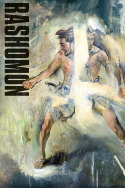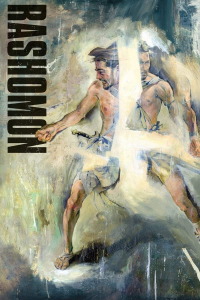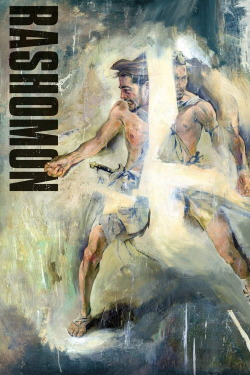
Review of Rashomon (1950) by Cole M — 12 Nov 2012
Rashomon.
Director: Akira Kurosawa.
Review:
Immortal films from ages past, venerated because of their 'timeless relevance', repeated incessantly in the pages of dusty, old history books tend to be marginalized by modern audiences in the most condescending manner. It's rather unfortunate, to be honest. Such films are venerated for a very good reason and Kurosawa's Rashomon, is one of those films.
Throughout the years, we all have been exposed to the underbelly of Japanese culture in a very insightful manner. Themes of shame and disgrace, an abundant cliché, has made international audiences understand a way of life that is embodied throughout most of the nation's films and dare I say, made international audiences sick of them as well? Abundance, used above, is more an understatement than anything else. Japan is notorious for films featuring such themes. It's hard to count on one hand the amount of Japanese, live action, Samurai-esque films I have sat through that do not have a vehement authority demanding seppuku from a disgraced underling. It's rather tiresome and once the inevitable reared it's ugly head in the first thirty minutes of Rashomon, I exhaled begrudgingly, expecting more bowing, reciprocated by incessant, angry yelling. There's plenty of it in Rashomon. Bring earplugs.
But the thing about Rashomon, the thing about Kurosawa, is its unwavering ability to expose the true heart of man - a heart of fear using such a masterful knowledge of the craft of film-making. The resonance in Rashomon is outstanding. Although the film begins as a somewhat typical, crime/mystery, point of view, counter-argument cliché, the narrative begins to unfold into something so enticing, so gripping, that it gradually turns into one of the most insightful reflections on human nature and self-preservation. When it begins on the ramblings of an outstandingly charismatic bandit (pulled off only by the incomparable Toshiro Mifune), it ends (*spoiler*) on the spiritual exchange of two strangers, and the cries of an abandoned child. Rashomon becomes something further than what you expect and as soon as it begins to take an uncomfortably familiar route, it bolts up an unexpected trail through a dense, uncharted forest. It's so sad that audiences focus on a film's age as opposed to it's argument, when they negate a message in favour of outdated craft and performance. To criticise a film from a biased standpoint, in this case, after 50 years of evolution in the medium, to compare an aged product with modern standards, is so criminal. I've seen a lot of film students laughing at over-the-top performances and scoffing at dialogue that carries the weight of ignorant, old-school melodrama, especially when it comes to Kurosawa. To cherish what Rashomon is saying about the mask of pride and the heart of fear beneath, is far more entertaining than finding something to ridicule. When a film has such a noble aim and and such impeccable craft, it's sad to see audiences marginalise such outstanding work because it has wrinkles. Kurosawa knows how to say something using the medium and Rashomon does it better than most of his films.
This review of Rashomon (1950) was written by Cole M on 12 Nov 2012.
Rashomon has generally received very positive reviews.
Was this review helpful?