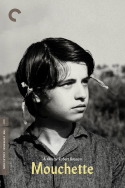
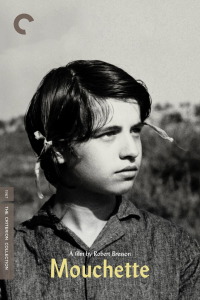
Review of Mouchette (1967) by Espen N — 19 Apr 2008
A tragedy about growing up unprotected to a cruel world. I can see that probably many young girls identifies with Mouchette, whose adolescent stage in life is filled with snares that entrap her from being free.
She is like the hunted partridge in the opening sequence, unaware that she is observed, and sort of controlled by the adult world. Every day seems to be the same, and she suffers from helping her dying mother and infant brother.
Her father and bigger brother do nothing but drinking, and even on sundays during mass as the church bells tolls. School is relentless, and fellow pupils group up against each other. Even though her intensions towards others are good, her behavior and generosity is met by misunderstandings, contempt and disgust.
Mouchette is not stubborn, but used to being commanded, and when a local hunter brings her to a shelter in the woods during a rainstorm. Her consolation of the drunkard is touching, as she sings her homework melody as a lullaby to him.
In return, the hunter abuses her and forces her to lie about him. Compassion and empathy are again crushed by greed and egoism. Robert Bresson is interested in human actions, as wells as how we treat one another.
There are frequent shots of hands operating items, tools, cooking accessories and food, which impersonates the personality of the user. Mouchette knows how to do things her own compassionate way. So her last choice of escaping all the miseries in the unforgiving countryside comes as a deliverance of evil.
The film is among the saddest I've seen, but still one of my absolute favorites, and makes me appreciate life, and the kindness of friends.
This review of Mouchette (1967) was written by Espen N on 19 Apr 2008.
Mouchette has generally received very positive reviews.
Was this review helpful?