Review of Ikiru (1952) by Devon B — 12 Dec 2010
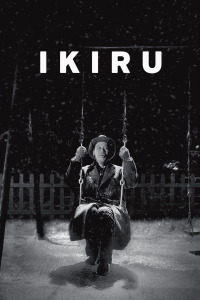
"This stomach belongs to the protaganist of our story. At this point he has no idea he has this cancer". So says the narration over the beginning of Ikiru, the 1952 film from Akira Kurosawa. It then goes on to show "the protaganist", a public relations section chief (of his local government) hunched over a desk in front of a wall of bundled papers.
"It would be tiresome to meet him now, after all he's simply passing time without actually living his life. In other words, he's not even really alive." If he's not really alive, neither are his co-workers, who play bureaucratic hot potato with a group of citizens ("passing the buck" seems to be the natural state of government, or so the film says).
Besides skewering government bureaucracy, Ikiru also draws parallels to Ingmar Bergman's 1957 film, "Wild Strawberries": with the looming specter of death at hand, a single father ponders the relationship he has with his son (and also his own mortality) while trying to cling to the vibrancy of life he finds in a younger girl.
What's sad about this movie isn't necessarily that the old man is dying, but how everyone around him is barely living. The prostitutes, the writer, the mafia, his governmental co-workers, his family, even the doctors who tell him he's dying, none of them are honest or happy (or honest and happy, apparently you can't be both).
Only his frivolous young female co-worker makes the most of the life she has. She doesn't waste a second of her time being in unhappy situations, and points out false sacrifice of dedicating his life for his son.
The story of the old man who finds out he's dying and then has a change of heart may not be revolutionary, but the style and perspective in which it's told is more unique than similar stories.
"To live", is what the film's title translates into, but "life without purpose is meaningless" is the message. Those without purpose are simply living to die. But if you do something good for others because you have nothing to lose and you know you're going to die, is that as morally good as doing something for others when you have something to lose? (Aren't we all dying in the long run, and shouldn't we live our lives accordingly?) Is it cynical to even ask? It's a discussion raised in the film, where the old man's co-workers decide to honor his memory by living as he did at the end.
Kurosawa plays on the audience's emotions, especially our sense of outrage, quite effectively at the end. Whether it's a shot at politicians and bureaucrats or whether it's a shot at the human race in general is up for debate.
This review of Ikiru (1952) was written by Devon B on 12 Dec 2010.
Ikiru has generally received very positive reviews.
Was this review helpful?