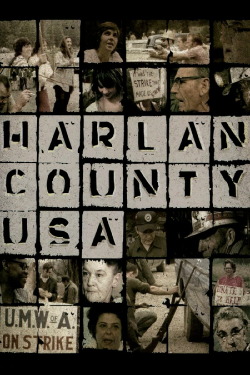
Review of Harlan County U.S.A. (1977) by Rob C — 30 Oct 2013
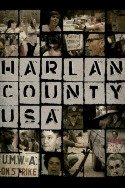
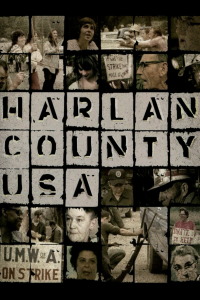
In 1973, Barbara Kopple set out on a mission to reveal the truth of Harlan County by filming a documentary about exploited miners. Way ahead of its time, Harlan County, USA (1976) shines light on the poor, coal-covered miners and their struggles in a small county in Kentucky with amazing cinematic style. The cinematography is fantastic and helps to stimulate an emotional impact on the viewer. The film's distinguishing feature is real time documented footage from the miners' perspective against the tyrannical power of the oil companies who essentially own the miners. Kopple and her cameramen got right inside the miners' lives to help them convey their side of the story. To do this, Kopple explained that she and her crew lived with the miners for a year and also said "The filming wouldn't have been possible without the support of the community-in a real way, because we were living with them" (Crowdus 23). Although Harlan County, USA fails to be an unbiased observational documentary, it still manages to transmit a heart-warming story of valor, resilience, and community.
As the name of the movie implies, the film takes place in Harlan County, Kentucky, a small town known for its coalmines. The massive oil company Duke Powers employs the people in that area to mine the coal there, but the problem is that it extremely underpays the miners. Coal dust entering the miners' lungs create incredibly awful working conditions as well as the town's appearance being comparable to a garbage dump. The miners have lived in Harlan all their lives with their families along with their ancestors and cannot relocate to find better jobs. So they start trying to improve their working conditions by making the Duke Powers Company sign the miner's union contract but it refuses to do so in fear that it will lose too much money. Through the miner's perspective, that Kopple manages to capture so well, this indifference the company shows to its miners is diabolical evil that should not go uncontested. The miners organize themselves and form picket lines, which the company ignores. A third party forms, which are miners, denominated "Scabs", who contest the picket liners by still going to work. Tension builds up, miners struggle with each other, dozens of arrests occur, hundreds of shots are fired, one miner is killed, and much more. The story is a real, down to earth documentary that brings to life this Harlan community, the pretty stuff and the bad stuff.
As if it was not mentioned clearly enough, allow me to repeat myself; the cinematography is fantastic, especially the use of mise-en-scene. The film's opening scene is an excellent example of such. A medium long shot from a low camera distance is given of a miner. The miner is against a light causing a low-key lighting and a silhouette of most of his body is given covering his face. His body and clothes show a clear indication that he is underground and covered in dirt. This gives the mood of a mystery hardworking miner that the viewer may interpret as, "the movie is not about this specific miner, but about the miners as a group." With this mise-en-scene, the film takes an immediate course of what it is going to show to the world and about it's deeper message.
Kopple shows a unique interest to the miners on a personal level, which viewers can see through her editing of cuts and sound. She uses this own quality of hers combining it with her editing to transmit the life essence of these miners to the viewers. We, as viewers, can to some degree feel the emotions of these miners and get a brief yet powerful understanding of what their lives entail. In a certain scene, Kopple films a ragged, old, and retired miner in his porch. The miner is missing all of his teeth and looks very limb on his rocking chair. His accent is rough and southern; his face is worn and covered in wrinkles. There is nothing lovely about this used-up miner from his medium shot. The way he squints his eyes and coughs can, to a certain point, make the viewer cringe (I know it did to me). The old man then proceeds to start singing. It is not a lovely song and it is certainly not a musical sensation, but it is this man's lifestory in lyrical form. The meaningful lyrics are filled with sad events to which Kopple cuts off from the man's face and shows more of the tattered down village with the old man's song still playing in the background. It beautifully creates an effect of sadness and keeps the film rolling while the viewer is presented with more tragic scenery.
Kopple excluded the oil company's and the scabs' points of view and thus did not provide us with the whole side of the story; while this may be a flaw in filmmaking, it is also its strength. In an article detailing Harlan County, USA's success, Gary Crowdus explains "it has much of the dramatic power and emotional impact of a fictional film, thus accounting for its potential to reach a general audience" (46). By living with the miners for a year, Kopple's viewpoint drastically reflects that of the miner's allowing for a much more intense message in her film. She reveals the cruelties and exploitations the world contains through her film and that the victims should stand up to these cruelties for their rights and consequentially to avoid misery. By making her film so tragic and emotionally impacting, it is essentially a call to arms to defend these poor miners and bring the tyrant oil companies to justice.
I personally enjoyed this film; for a documentary, it really deviated from the norm while still having the feel of a documentary by excluding a narration and providing archival footage to fill in gaps of information. The film provides a great picture of the issues existent in Harlan County at that time and attaches you to the miners' community emotionally. The events and characters in Harlan County, USA are all real places and people that help boost the craving for truth and information while at the same time the craving for a good story. It can not be stressed enough how the cinematography was way ahead of its time and helped set a trend for future films at that time. No other films at that point in history had done such a good job in implementing mise-en-scene and editing tools. I would recommend this movie for all those people who crave for real events but at the same time for a beautifully crafted story to follow up along with it.
This review of Harlan County U.S.A. (1977) was written by Rob C on 30 Oct 2013.
Harlan County U.S.A. has generally received very positive reviews.
Was this review helpful?