Review of Greed (2020) by Bertaut1 — 02 Mar 2020
A savage and hilarious satire.
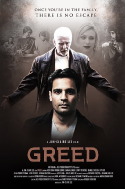
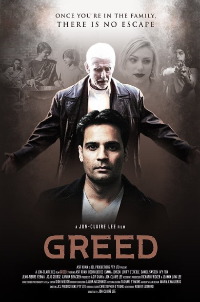
We live in an era where wealth is distributed upwards and the gap between the haves and have-nots has become wider than ever. According to inequality.org, the richest 1% of the world's population controls 45% of global wealth, whilst the poorest 64% of the population control less than 1% of the wealth. In 2018, Oxfam reported that the wealth of the 26 richest people in the world was equal to the combined wealth of the 3.5 billion poorest people. This is the milieu of Greed, a hilarious satire from prolific genre-hopping writer/director Michael Winterbottom. Examining how the rich get richer, the film focuses on a successful British clothing entrepreneur, and its bread and butter is the concomitant grotesquery that results when an individual has the same wealth as a small country. Mixing send-up and satire with more serious socio-economic points, Greed doesn't really do or say a huge amount that hasn't been done or said before, but it's entertaining, amusing, and undeniably relevant.
Sir Richard McCreadie (Steve Coogan) is one of Britain's richest men. The perma-tanned "self-made" billionaire is the owner of several clothing chains and is known as "the King of the High Street", although a less complimentary nickname is "Greedy" McCreadie. On the Greek island of Mykonos, the final (chaotic) touches are being put to McCreadie's Roman-themed 60th birthday bash – complete with mandatory togas, a fake coliseum, and a real, albeit somnolent, lion. Much of the story is told through the lens of McCreadie's "official biographer" Nick (David Mitchell), a classically-trained literature buff who drops quotes from Shakespeare and Shelley into everyday conversation, and who hates himself for agreeing to write a fawning celebration of McCreadie.
The idea that a billionaire could be so cut off from workaday reality as to stage a Roman-themed birthday party on a Greek island may sound far too on the nose, too ridiculously hubristic to say anything of any worth, too over-the-top to even function as satire. However, McCreadie is based on Sir Philip Green, chairman of the Arcadia Group, avoider of taxes, exploiter of the working-class, asset-stripper, and enemy of the #MeToo movement. Similarly, many of the details of McCreadie's ludicrous birthday are lifted verbatim from Green's very real 50th birthday celebrations in 2002 – when he flew 219 guests to Cyprus for a three-day toga party.
McCreadie, of course, is a hilariously despicable slimeball, a man who unironically feels hard done by when Syrian refugees show up on the (public) beach he's using for his birthday, and Coogan portrays him as not only narcissistic and void of conscience, but as a classless philistine – whereas Nick, for example, can quote Shakespeare and Shelley, McCreadie proudly gets his cultural know-how from BrainyQuote. However, for all his loathsomeness, McCreadie is a symbol for the system that gave rise to and sustains him; he's simply the result of an economy that takes from the poor and gives to the rich. For all his crass hubristic excess, McCreadie is neither an aberrant individual nor is he a criminal – he's a vulgar product of the system.
Aesthetically, the film employs a plethora of techniques, including non-linear editing, direct-to-camera addresses, YouTube videos to provide exposition, split-screen, fake news footage, and title cards. However, it's at its most effective when at its simplest, particularly in scenes involving the wonderful Dinita Gohil as Amanda, McCreadie's overworked PA. Her interactions with Nick provide the emotional core of the story, and their scenes are all simple shot/counter-shot editing and blocking. And by far the film's best sequence, which comes towards the end, is another simple setup involving Amanda and McCreadie, wherein the scene tells its story not through aesthetic bombast or even dialogue, but through the expression on Gohil's face. It's the moment during which Winterbottom drops all pretence of comedy and focuses on the more serious issues that have hovered at the fringes since the opening seconds.
If I were to focus on any one problem, it would be two underdeveloped subplots. A (staged) reality TV show subplot involving McCreadie's daughter Lily (Sophie Cookson) provides for some very funny individual moments, but it contributes nothing whatsoever to the main plot. Additionally, the fact that McCreadie and his ex-wife Samantha (Isla Fisher) are still in love with one another is a theme which never really goes anywhere, which is a shame, as it could have provided some much-needed character development for her and some shades of grey for him.
For better or worse, we live in an age where there are more billionaires than ever before, and Greed is a comedy about the excess and disconnect of such people. However, so too is it a cautionary tale, a reminder that just because we're removed from exploitation doesn't mean such exploitation isn't happening.
This review of Greed (2020) was written by Bertaut1 on 02 Mar 2020.
Greed has generally received mixed reviews.
Was this review helpful?