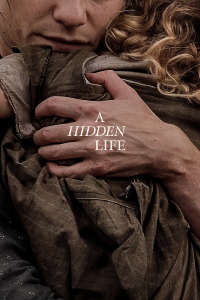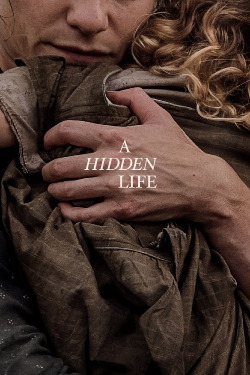
Review of A Hidden Life (2019) by Bertaut1 — 30 Jan 2020
A meditation on morality and faith; a film of unparalleled sublimity; an experience beyond the sensory.
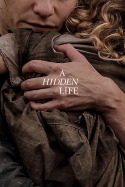
A Hidden Life, which may be writer/director Terrence Malick's most ostensibly Christian film yet, is quintessentially Malickian, featuring many of his most identifiable stylistic traits. His films are about the search for transcendence in a compromised and often evil world, and, telling the true story of the Austrian conscientious objector Franz Jägerstätter, A Hidden Life is no different. How good is it? Very, very, very good. Not quite The Thin Red Line/The Tree of Life good, but certainly Badlands/Days of Heaven/The New World good. This is cinema at its most sublimely pious. You don't watch A Hidden Life. You let it enter your soul.
Austria, 1938. In the bucolic village of Sankt Radegund, farmer Franz Jägerstätter (August Diehl) lives with his wife Fani (Valerie Pachner) and their family. A devout Christian, he's unenthusiastic about the looming war, despite its widespread popularity in the village. As time goes by, and the war shows no signs of ending, his opposition grows ever more ingrained, to the point where his family are being harassed. Eventually, he's conscripted, but refuses to swear an oath of allegiance to Hitler, and so is arrested and imprisoned.
Needless to say, Malick fashions this material into a thematically rich mosaic. To a certain extent, all his films deal with the corruption of Eden, and Hidden Life is as literal as Thin Red Line and New World in this respect. Sankt Radegund is an earthly paradise (the film was originally called Radegund, before adopting the George Eliot quote as its title). However, as the war takes hold, the village comes under attack, not by bombs, but by ideological complicity, and the village at the end is an infinitely different place from that at the start, a tainted place.
Franz doesn't resist the Nazis because of politics. His reasons are simpler – he believes that God teaches us to resist evil, and as a great evil, he must therefore resist Nazism. In an important exchange with Judge Lueben (Bruno Ganz), Franz is asked, "Do you have a right to do this?", to which he responds, "Do I have a right not to?" His resistance is in his very soul. Indeed, watching him head willingly toward his tragic fate, turning the other cheek to the prison guards who humiliate him, he becomes something of a Christ figure, with his time in prison not unlike the Passion.
Aesthetically, as one expects from Malick, A Hidden Life is almost overwhelmingly beautiful, particularly in its depiction of nature. Shooting digitally, Malick and his first-time cinematographer Jörg Widmer shot most of the exteriors in a wide-lens anamorphic format that distorts everything outside the dead-centre of the frame. The effect is subtle (we're not talking fisheye lens distortion), but important – pushing the mountains further around the village, bringing the sky closer, elongating the already vast fields. This is a land beyond time, a modern Utopia that kisses the very sky. It's also worth noting that a lot of the VO is epistolary, with large portions taken from the letters Franz and Fani write to one another when he was in prison. For Malick, this is a very conventional style to employ, especially insofar as his VOs have been getting more and more abstract as his films have gone on.
As for problems, as a Malick fanatic, I found very few. You know what you're getting with a Malick film, so complaining about the length (it's just shy of three hours) or the pace is kind of pointless. You know if you like how Malick paces his films, and if you found, for example, New World boring beyond belief, so too will you find Hidden Life. One thing I will say, though, there are a few scenes in the last act that are a little repetitive, giving us information we already have or hitting emotional beats we've already hit. It could also be argued that the film abstracts or flat-out ignores the real horrors of World War II, but that's by design. It isn't about those horrors, and Thin Red Line proves Malick has no problem showing man's inhumanity to man. The same is true for politics; much like 1917 (2019), Hidden Life is not about politics, so to accuse it of failing to address politics is to imply it's obliged to address politics. Which it most certainly is not.
In the end, A Hidden Life left me profoundly moved, on a level that very, very few films have (Thin Red Line and Tree of Life amongst them). Less a film than a spiritual odyssey, if you're a Malick fan, you should be enraptured. I don't know if I'd necessarily call it a masterpiece, but it's certainly close and is easily the best film of 2019 that I've seen thus far (the fact that it missed out on a single Academy Award nomination is a commentary unto itself).
This review of A Hidden Life (2019) was written by Bertaut1 on 30 Jan 2020.
A Hidden Life has generally received positive reviews.
Was this review helpful?