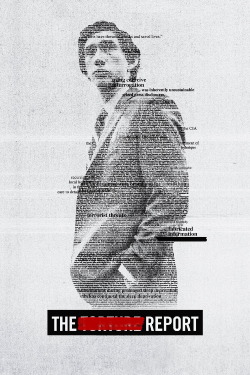
Review of The Report (2019) by Bertaut1 — 06 Dec 2019
Probably too rooted in the theatrical tradition for some, but it does an exceptional job of compacting a massive amount of info into a comprehensible form.
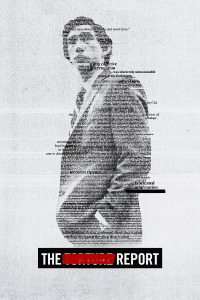
Written and directed by Scott Z. Burns, The Report tells the story of the Senate Select Committee on Intelligence's $40m, five-year investigation into the CIA's illegal use of torture in the years after 9/11 - dubbed "Enhanced Interrogation Techniques" (EIT). Completed in 2012, the Committee's findings were detailed in a 6,700-page Report, which remains classified, although a redacted 525-page Executive Summary was published in 2014. More of a procedural drama than a political thriller, it could do with a little emotion, and it's very talky, but this is a brilliantly acted and unflinching, look at one of the most shameful moments in US history.
The plot is extremely straight-forward - it follows Senate investigator Daniel J. Jones (Adam Driver), who is appointed as the head of a bipartisan six-person team (three Democrats, three Republicans) by Senator Dianne Feinstein (Annette Bening) to investigate the CIA's general conduct when interrogating suspected terrorists. The film then takes us (often achronologically) from the commencement of the investigation in early 2009 on up to the fight to have the Report made public in 2013/2014, with both the CIA and the Obama Administration throwing up multiple obstacles.
Much as were The Looming Tower and Vice (both 2018), The Report is a very left-centric narrative, and the depiction of James Mitchell (Douglas Hodge) and Bruce Jessen (T. Ryder Smith), the psychologists who developed and implemented EIT, is particularly condemning. If the film has any villains, it's these two; snake-oil salesmen with psychology degrees but no experience of actual interrogations and no data to back up their claims that torture works (because no such data exists - anyone who had read even a little history knows this). Mitchell and Jessen are shown as enjoying the experience of hurting these people – their justification for doing so (that such interrogation will save lives) exposed as utterly fabricated. At one point, Jones reports to Feinstein that Khalid Sheikh Mohammed had been waterboarded 183 times without any results, prompting her to ask, "if it works, why did they need to do it 183 times?" Why indeed.
The film makes no bones about just how ineffective EIT actually was; no useable information was ever extracted, and as Jones states, "all they did was make it impossible to prosecute mass murderers." Also emphasised is the CIA's attempts to provide legal justification for EIT - the Torture Memos made the argument that EIT is legal if it results in "unique, otherwise unavailable" intelligence, or, as Bernadette (a thinly-veiled Gina Haspel played by the goddess that is Maura Tierney) says, "it's only legal if it works.".
Thematically, although the film examines multiple politically charged themes, for the most part, its thematic concerns are understated. For example, the Republicans who oppose the Report adopt a stance of "admit nothing, deny everything, make counter-accusations". This has been Donald Trump's preferred method of defence since day one. This parallel is never explicitly addressed, but it's right there for those willing to see it.
Although the film shows the reception of the Report and the debate regarding publication breaking down along broadly partisan lines, it doesn't shy away from complications - it mentions that Republicans Olympia Snowe and John McCain were in favour of publication, whereas Obama, Secretary of State John Kerry, and Chief of Staff Denis McDonagh (Jon Hamm) were not. The film references Feinstein's disdain for Edward Snowden and whistle-blowers in general, and it's to Burns's credit that he doesn't shy away from such complications, thus avoiding an overly neat dichotomy of Democrat=good/Republican=bad.
In terms of problems, it's exceptionally talky. It didn't bother me, but I can certainly understand people regarding it as one step removed from an audio recording of the actual Report. There's also a distinct lack of emotion. Along the same lines, there's no character development – we learn nothing about anyone beyond their involvement or connection with EIT and the Report. This is by design, of course, with Burns wanting to focus on the facts, but again, I can understand people finding it unsatisfactory.
The Report is a straightforward and restrained film, in which Burns's focus is razor-sharp and unwavering. Depicting how EIT shamed the nation, betraying the very values that were being fought for in the first place, the film excoriates both the Bush administration for letting it happen and the Obama administration for its reluctance to make it public. It's not exactly exciting in a traditional sense, but it sure is compelling; a story that's infuriating insofar as it happened, horrifying insofar as, given the clown currently in the Oval Office, it could happen again.
This review of The Report (2019) was written by Bertaut1 on 06 Dec 2019.
The Report has generally received positive reviews.
Was this review helpful?