Review of Florence Foster Jenkins (2016) by Blake B — 10 Feb 2017
I love to sing, but only when I'm with me, myself, and I and the setting's my scratched RAV4 and not an overlit theater stage. Better it stay intimate when I'm belting it out and the sounds are more dying calico than Mick Jagger.
So props to Florence Foster Jenkins (1868-1944) for loving to sing and not giving a damn whether her voice sounded like honey being poured onto a chocolate bar. Billed.
"the world's worst opera singer" by historian Stephen Pile, Jenkins spent the vast majority of her adult life as a uppercrust socialite married to a subpar Shakespearean actor and owner of the Verdi Club, a hotspot for the New York's affluent.
It wasn't until 1944, the last year of her life, that she began taking her adoration of opera seriously, likely the result of wanting to "give back" to the war effort. With the help of her loyal spouse and her hesitant pianist Cosmé McMoon, she went from little known heiress to resident talk of the town, released records and well-attended concerts bolstering her popularity to cult status within a matter of months.
That widespread attention, though, came in waves notably opposite from Jenkins's good intentions. While she was under the impression that she was bringing joy to the world with a beautiful voice, people were, in actuality, cackling madly at her various incompetencies as a singer. (The woman, in an unfair twist for a person so dedicated to music, was tone deaf, rhythmically inept, and inefficient at enunciation and phrasing.).
Eventually, she came to understand that people enjoyed her so immensely because of her role as an accidental comedienne. But rising laughter out of people didn't much stop her from loving the craft she only professionally undertook for a short period of time. "People may say I can't sing," she famously proclaimed toward the end of her life. "But no one can ever say I didn't sing.".
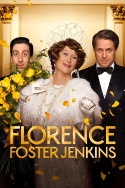
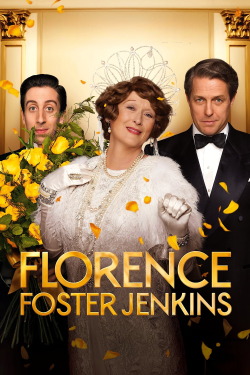
2016's "Florence Foster Jenkins," a Stephen Frears directed tragicomedy predominantly focused on her final year of living, effectually encapsulates why the woman captured the hearts of the American public so unfeasibly quickly. Through Meryl Streep's predictably wonderful performance as the delusional singer, we're given a personality whose looniness, on stage and off, is totally endearing. We can guffaw at her sounding like one of Simon Cowell's many targets of snarling criticisms all we want, sure, but in the film she's additionally made human, and considering how difficult it inevitably is to detail the life of a character perfectly fit for a particularly brutal "Saturday Night Live" skit, that's triumph in itself.
Looking like a razzly dazzly Technicolor Hepburn and Tracy feature, too, it's fizzy escapism one can get behind, being just light enough to lose oneself in and just weighty enough to avoid getting whisked away in the winds of forgettability. And we get to witness some of the best performances of the year. Streep is masterfully screwball with a hint of melancholy (she's especially impressive in scenes wherein Jenkins is performing for an audience, considering her own notable singing abilities), but revelatory are Hugh Grant, as Jenkins's dutiful husband, and "The Big Bang Theory's" Simon Helberg, as the jittery pianist McMoon.
In a career so jam-packed with performances featuring Grant working hard to maintain his persona as the neurotic blessed with plenty of romantic charm, it's refreshing, to say the least, to watch him portray someone profoundly complex in the way they present themselves to the world versus who they are behind closed doors. Helberg, hilarious, is amiable -- perhaps even Oscar-worthy -- as the man that acts as our catalyst into the crazed scenario. His flustered bewilderment in the face of nearly every development in his insinuation into the bourgeois way of living is ever lovable. But like Streep's Jenkins and Grant's Bayfield, there's also a present sensitivity about him that gives him a rightfully placed air of wistfulness.
And that's the key to "Florence Foster Jenkins's" prosperity as a three-dimensional popcorn movie: comedically tinged characters that don't exist merely to make us laugh. While I find myself wanting more in terms of the film's more tragic elements (it spends too much time as a lark and not enough trying to dig deeper into the susceptibilities of the characters), I nevertheless took to the movie's broad humor and boisterous spirit. A find.
This review of Florence Foster Jenkins (2016) was written by Blake B on 10 Feb 2017.
Florence Foster Jenkins has generally received positive reviews.
Was this review helpful?