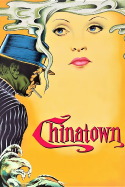
Review of Chinatown (1974) by Cael M — 15 Aug 2013
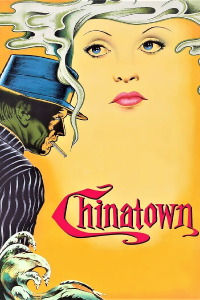
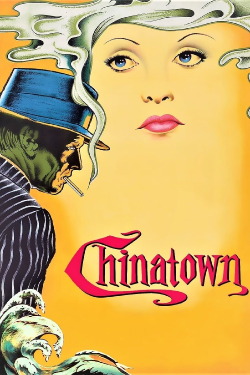
Chinatown is a classic, somber neo-noir that took the concept of film noir to a whole new level, redefining the concept in the sense that it took the bold move to create something far more complex, deep, and devastating than previous outings of the genre, while still retaining the style and suspense that the genre stands for. Despite having all the familiar elements of the genre, whether its the unique visuals and style, detectives, politics, or henchmen, Chinatown feels like its paying homage to those old noirs, embracing the familiarity of those elements, while adding heaps of social commentary and complexity to make this neo-noir more than meaningful and distinguishable, rather than an all-out style over substance noir. It's part mystery, part psychological drama, and part social commentary on the division of classes and corruption in our nation and during the '30s. Yet with all these layers, Chinatown still somehow finds room to make itself an intriguing, entertaining, and very suspenseful journey, mainly thanks to Robert Towne's screenplay, which may just be one of the best ever written, or if its the cynical performance by Jack Nicholson.
Chinatown follows a private detective named J.J. "Jake" Gittes, who's visited by a woman who claims she's named Ewelyn Mulwray who's concerned about her husband, Hollis, asking Jake to investigate him as she thinks he's having an affair. Hollis also happens to be the engineer of the Los Angeles Department of Water, and at the same time, Los Angeles is caught up in the middle of a bad drought. Jake performances surveillance for a day on Hollis- however, later, Jake finds out that Hollis went missing, only to turn up drowned and dead. After coming back to his office, he's visited by the real Ewelyn Mulwray, telling Jake that they've never met before, and threatens Jake with a lawsuit for his involvement. Jake continues his investigation regarding this scenario, and the intricate plot follows him through a journey of deceit, murder, and secrets, with his intention to uncover what he believes involves a conspiracy with unknown motives. The plot sounds convoluted, but in reality, it's quite easy to follow, while increasingly becoming complex as time goes on. This may be the case considering I was so invested in the gripping plot that I didn't miss a single detail, and as a result I found it somewhat easy to follow. One of the fascinating aspects about this movie is realizing how complex the plot has increasingly grown by the end of the film, and it's definitely rewarding.
I can't stress enough how phenomenal the acting is here, especially the cynical, hard-boiled performance by Jack Nicholson. He outshines most actors when it comes to roles like this in a neo-noir, with the typical fedora, coat, and cigarette, but with so much more depth. It's almost as if Jack Nicholson was playing himself. He's a tough and upright man, yet he's damaged as well, and he often reveals that when he's in a troubled scenario. He feels like he has plenty of energy, yet he still feels like a quiet man, as if he was playing the Joker but quietly. Apart from Jack Nicholson, we have Faye Dunaway as Evelyn Mulwray, and similar to Jake, she has a damaged, troubled past that remains a secret until the end. She's clearly a vulnerable character, and at times, she almost feels as if she were some detached, distant, reclusive doll. Evelyn has that weird presence and sense of deceit and mystery, common in many previous noirs. The way she and Jake play off of each other with great chemistry makes the movie worth watching alone, but there are some other great performances here as well, and the movie wouldn't be anywhere as good without them. John Huston, the director of the incredible classics, The Treasure of the Sierra Madre and The Maltese Falcon, surprisingly has a role here, and between Jack Nicholson and himself, I can't tell which one's the real star of the show. John Huston plays Noah Cross, Evelyn's father, who's the former owner of the Water Department along with Hollis Mulwray. He doesn't have much screen time in the movie, but for what he has, he's a cold, repulsive man, and you honestly hate him to bits by the end of the movie.
Of course, as with many noirs, there's a sort of "standard" that must be reached in order to classify yourself in the genre. There's the vibrant yet shadowy colors, the alternatively beautiful and depressing score, the twisty detective plot, and the dread, danger, and anxiety of the era. The cinematography has the familiar beautiful yet hostile and mysterious feeling, and Jerry Goldsmith's amazing score remains among my favorites I've heard in a noir movie. There's the familiar oddly lit, dark and beautiful atmosphere, and there are plenty of fedoras, coats, and cigarettes to gaze at. There's the femme fatale that the protagonist falls in love with, as well as the constant paranoia that both the audience and the characters feel through the movie. Polanski is at the top of his game here, fully utilizing all these classic noir elements yet adding so much more. The ending took me by surprise, and it practically killed my spirit. For those last five minutes, I honestly couldn't believe my eyes, and I was both riveted and sharking, the highest compliment I can give to an ending like that. Some may complain of the change of tone for the ending, and I've heard some say that it almost singlehandedly ruined the movie, but obviously, there's a significant meaning behind it that's not very hard to notice. Everything before the ending is happy and entertaining while being suspenseful and dark, but the ending turns the tables, and it shatters everyone in the movie, as well as the audience. People can't always control fate, but fate controls them. The American Dream and the authority behind the city are corrupt and failures, and the common people are helpless. Good intentions are suppressed, and the division of classes between the rich and the poor is unfair and meaningless.
I'm not jumping on the "bandwagon" when it comes to Chinatown, and I honestly loved it just as much as I expected to. Chinatown has clearly stood the test of time as a mature, poignant neo-noir, and it's just as powerful and affecting as it most likely was back in '74 when it was first released. With its mysterious, seemingly complex yet simply easy to follow plot, its dark yet beautiful atmosphere, its underlying themes that still pack the same punch today, and all the classic noir elements that defined the genre, it's honestly no wonder as to why Chinatown is one of Polanski's biggest achievements. Chinatown is one of those films from that very long "list" that everyone should see at least once in their lifetime. Whether you're a huge fan of Polanski, the genre, or movies in general, Chinatown is one noir not to be missed.
This review of Chinatown (1974) was written by Cael M on 15 Aug 2013.
Chinatown has generally received very positive reviews.
Was this review helpful?