Review of Becket (1964) by Monique S — 09 Feb 2011
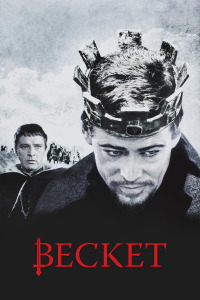
Becket, released in 1964 belongs to the classical biopic canon with two excellent performances by Richard Burton and Peter O'Toole. Made just two years after O'Toole's turn as T.E. Lawrence in Lean's epic, his portrayal of Henry II includes one or two nods to the manic side of his 1962 character.
Burton is subdued as the holier than thou (though not at first in the spiritual sense) Thomas Becket. The film rotates around the friendship of Henry and Becket and reminds the modern viewer of a politician and their confidante such as Blair and Alastair Campbell, or more generally, two people who seemingly cannot be as powerful alone as they are together.
O'Toole's Henry holds contempt for mostly everyone in the film, his wife, his mother, the church and is loyal only to his inner circle. Becket on the other hand is a saxon who is operating within the world of the conquering Normans and is seen as unworthy by everyone except Henry.
It is in Becket's intelect and judgement that he is seen as being two steps ahead of everyone else, but his position as a Saxon reveals his inner contempt for his own position and his inability to love or honour anyone or thing.
His last chance at happiness literally dies when his love kills herself after discovering she must become Henry's mistress after a bet. When the head of the church dies, Henry sees this as his chance to gain control of the only force capable of conquering him by placing Becket, his most loyal servant as Archbishop of Canterbury.
When a priest is murdered by one of Henry's lords, on suspicion of a crime without trial Becket discovers his loyalty to God and the church is too strong for him to resist and his excommunication of the lord builds an unpassable barrier between himself and his former liege.
The tensions between the two leads are played out brilliantly and although the film is an ample 150 minutes, it never outstays its welcome. Questions and themes of honour, love and morality (as deemed by law or the church) are examined with subtlety or rage given the situation and Burton's calm morality juxtaposes O'Toole's power-hungry desperation well.
The script won an Oscar for best adaptation and the leads lost out to Rex Harrison in My Fair Lady rather unluckily. And those performances were illicited on what I can only imagine were some of the largest hangovers in cinema history.
This review of Becket (1964) was written by Monique S on 09 Feb 2011.
Becket has generally received very positive reviews.
Was this review helpful?