Review of Anne of the Thousand Days (1969) by Laura M — 10 Mar 2008
[i]Anne of the Thousand Days.
dir. [/i]Charles Jarrott.
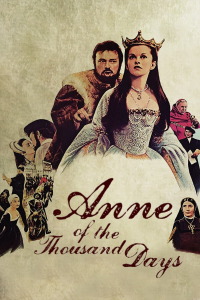
Richard Burton and Geneviève Bujold provide a great deal of sexual tension as King Henry VIII and his doomed consort, Anne Boleyn. The film covers the King's divorce with Catherine of Aragon through to the beheading of Anne. It is a romantic picture consumed with rages, fits, and occasional bits of gaiety and celebration. Both leads are scintillating in their roles and subsequently the film does not want for energy or chemistry.
As Anne Boleyn, Geneviève Bujold possesses a freshness that is accentuated by exquisite posturing and a bearing that reveals the headstrong woman she would become. Bujold is exceedingly lovely throughout and plays Anne as a character with a distinct desire for power and the necessary connections that follow. Richard Burton is virile, hyper-masculine yet sensitive to the maneuverings that his base actions have caused for the individuals who flutter about his court. At the beginning he is torn over signing Anne's death warrant even though it has been properly sanctioned by the strict law of the land. The film then goes back to when he was still married to Catherine and trying desperately to rid himself of her. His initial passes at Anne are those of a schoolboy nervously chatting up whatever girl it is he fancies. Anne's continuous rebukes are comically played as King Henry, unaccustomed to not getting whatever thing in skirts he desires, tries desperately to finalize the details of their courtship.
The set design in this film are extraordinarily lush and quite intoxicating. They lend the events an air of authenticity as the viewer absorbs the rich colors and textures that are contained within. As Anne is transformed from a mere girl who scorns the advances of the lusty King to a devoted wife the energy of the film shifts as well. She is no longer the coveted, erotically-charged prey of the beastly King but rather a fiercely independent woman with an appetite for power and prestige. Unfortunately for Anne, the mob is devoted to Queen Catherine and scream out "Whore" during her coronation ceremony. This is the same language Henry uses to gall Anne late in the film when he tires of her. Anne is charged with adultery and incest as well as treason and there is widespread speculation that she is a witch who has used her satanic powers to cast a spell over Henry. The film suggests that the relationship began to sour because Anne dared to deliver a healthy girl, the future Queen Elizabeth. Henry cannot hide his consternation at this outcome because he is convinced that only a male heir will satisfy the edicts of his legacy.
A major event in the film is the early stillborn delivery by Anne late in the film. Henry accuses Anne of deliberately murdering their son. Anne is necessarily devastated and it is this event that sets the wheels in motion that ultimately lead to her execution. Bujold gives Anne a rambunctious spirit that throughout the film cannot be adequately tamed. It is a delight to watch her maneuver her way around court both before and after she is crowned Queen. As King Henry's jilted wife, Catherine, Irene Papas elicits an intense sympathy for her fall into disruin. Catherine is portrayed as being just as willful as Anne. The scene when she pleads with Henry not to abandon her is rife with deep melancholy that hangs over her character throughout the film.
Overall, this is a powerful exploration into early 16th century romance and politics. The squabbling, deceit, and perpetual struggle for advancement create a mesmerizing picture of life in this particular court. Anne Boleyn is portrayed as an entirely sympathetic character who is unduly charged with abominable crimes and that her death was most certainly undeserved. The person of Princess Elizabeth is given high rank in this film as it is she who ironically carries ahead with the family dynasty despite Henry's insistence that a mere woman could never rule England. It is her spirit that haunts the film and renders all of Henry's carnal posturings as woefully misguided and ultimately unnecessary. Despite his protestations to the contrary, the wretched female child bore him by the "Great Whore" Anne Boleyn did more to further the wealth and prestige of England than Henry ever did. Ultimately, this film suggests that too much power in the hands of one man can lead to unmitigated disaster. Henry VIII is presented not as a glutton of food as in earlier representations but as a glutton of the emotions of the women he devoured as if merely for the sport of it.
This review of Anne of the Thousand Days (1969) was written by Laura M on 10 Mar 2008.
Anne of the Thousand Days has generally received very positive reviews.
Was this review helpful?