Review of A Streetcar Named Desire (1951) by Nick R — 28 Jul 2012
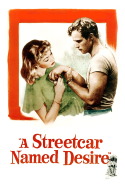
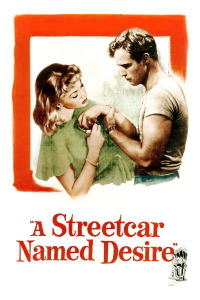
"I have always depended on the kindness of strangers." Although Tennessee Williams's play was meant to be all about the desperate, poetic heroism of Blanche DuBois, Marlon Brando's uncouth, sweaty animal magnetism opposite Vivien Leigh's frail, faded belle commanded the screen. Just as it had electrified Broadway theatregoers opposite Jessica Tandy's Blanche four years earlier (a production also directed by Elia Kazan). Brando's brooding naturalism, his earthy sexuality, and his howls of "Stell-ahhhh!" remain a nearly impossible act to follow for the actors who have subsequently assayed the brutish Stanley Kowalski.
Ironically, Kazan's screen version - also scripted by Williams but subjected to censorship of some frank content - won three of the four acting Oscars for Leigh, who had also played Blanche in London's West End production, directed by her husband Sir Laurence Olivier. Oscars were also won by supporting actors Kim Hunter and Karl Malden, but Brando was beaten at the post by Humphrey Bogart (for The African Queen). Nevertheless, Brando's impact in Streetcar placed him at the forefront of modern screen actors, the most famous and influential of the Actors Studio's "Method" exponents.
Having lost the long-in-decline family estate to back taxes and her reputation while seeking oblivion of solace, Blanche arrives in New Orleans to stay with her pregnant sister Stella and churlish brother-in-law Stanley in their cramped, sweltering apartment. Stanley, convinced that Blanche is holding out on a mythical inheritance, is driven wild by the neurotic woman, pathetically clinging to her refinement and delusions. Under Stanley's resentful bullying, Blanche's last hopes are brutally destroyed, and she retreats into a psychotic state.
Although it was Kazan's seventh feature film, Streetcar is theatrical rather than cinematic. Its power emanates from the performances, particularly the absorbing duel between the poignant, ethereal, classic (one might say determined), stagey Leigh and the explosive, instinctive Brando, who are as different in their acting approaches as Blanche and Stanley are in personality. Kazan, who was a cofounder of the Actors Studio in 1947 and still a force in American theater at the time, was showing little interest in the visual possibilities of the medium, but his way with actors is amply apparent here.
This review of A Streetcar Named Desire (1951) was written by Nick R on 28 Jul 2012.
A Streetcar Named Desire has generally received very positive reviews.
Was this review helpful?