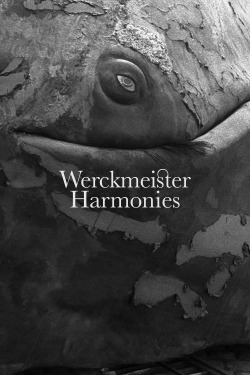
Review of Werckmeister Harmonies (2001) by Sindri — 20 Feb 2011
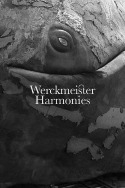
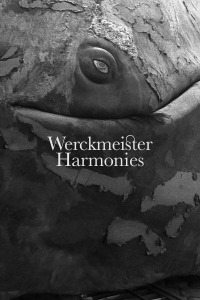
Skillfully structured - There are those filmmakers that have the ability to change our perception of film as a medium for telling stories through images and dialog, communicating with a universal audience and creating awareness. Directors like Campion, Loach, Bergman, Kubrick, Kieslowski and Tarkovsky are certainly some of those, and I had a similar experience after watching Bèla Tarr`s third feature, co-directed by Agnes Hranitzky, which tells the story of an utterly cold Hungarian town where the inhabitants await the arrival of a traveling circus which main attractions are a giant whale and a deformed speaking figure called The Prince. Most of the residents are suspicious about the upcoming event, but the local postman named Janus perceives it as a good sign.
While viewing this film I instantly began thinking of other east European directors such as Alexandr Sokurov, Theo Angelopoulos and Andrei Zvyagintsev who's film are marked by their focus on visual composition, length, long takes and concise dialog. Bèla Tarr's dark and tender vision of life in a remote provincial town is filmed in black and white, contains 39 long takes during a runtime of 225 minutes, is told through long monologues and concentrated dialog, uses natural sounds and has an unforgettable instrumental theme song composed by the directors longtime companion Mihà ly Vig. This theme song and the refined black and white photography which was created by four photographers, evokes the collective state of mind of the citizens in the town and elevates the powerful moods which becomes a large character within this skillfully structured film. "Werckmeister Harmonies" an adaptation of a novel called "The Melancholy Of Resistance" which was written by Là szlò Krazsnahorkai in 1989 and the movie title refers to Andreas Wercmeister (1645-1706), a composer from the Baroque era and a musical theorist. It is a chronologically narrated character study about a man who's faith is immensely challenged when he begins to realize what is actually happening to the human kind he so firmly believes in. The story written by Bèla Tarr and Là szlò Krazsnahorkai follows the main character during the course of one eventful day as he walks through the streets of his hometown looking for signs that will confirm his believes. The caring and childishly curious Janus is brought to life by German actor Lars Rudolph who appeared in Hal Hartley's "Flirt" (1995) and Tom Tykwer's "The Princess and the Warrior" (2000). With a mysterious face that expresses a string of emotions and a subtly underplayed performance, he creates a rare and intriguing character. I consider this slow-paced fictional drama as a small masterpiece that communicates it's message with conviction and tells a credible story that is not hard to follow, but not always easy to watch. Bèla Tarr and Agnes Hranitzky's directing is commendable, their realized vision is magnificent, the acting is overall convincing, the opening scene is a striking example of cinematic art and what eventually puts all the pieces together and pointedly contrasts the common feelings of sadness that imprisons the souls of this film, is Hungarian composer, poet and songwriter Mihà ly Vig`s spiritual music.
This review of Werckmeister Harmonies (2001) was written by Sindri on 20 Feb 2011.
Werckmeister Harmonies has generally received very positive reviews.
Was this review helpful?