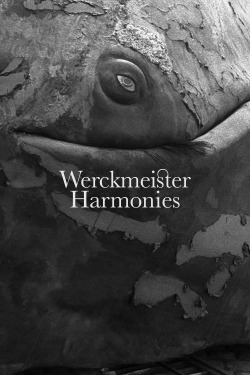
Review of Werckmeister Harmonies (2001) by Donovan D — 26 Feb 2008
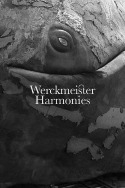
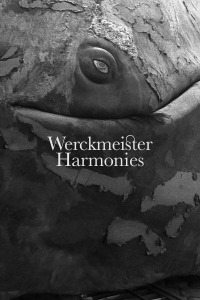
I always tend to approach Eastern European films with a slight sense of trepidation. Given its long communist history, a swing towards the left is only natural (and welcome). But far too often extreme excursions in boredom are mistaken for profound statements free of capitalist influence - as if even a shred of enjoyment was a cardinal sin. Considering Bela Tarr's notoriety as the director of the 7-hour Satantango and his propensity for long takes, I prepared myself for disappointment when I sat down to watch one of his highly acclaimed features, 2001's Werckmeister Harmonies. I would find however that all my worries were for naught, as Werckmeister Harmonies is one of the most marvelous films I've ever seen. As if to abate my concerns, it all begins with one of the most perfect extended takes ever, as protagonist Janos (Lars Rudolph) explains the celestial phenomenon of an eclipse. With perfectly moody lighting and a camera that moves around with such balletic grace, its one of those scenes you hope never ends. It does of course, but its long take sets the tone for just about every scene in the whole film - while in most cases a film is made to flow smoothly via its editing, Bela Tarr just lets his camera roll far past the point at which the take is simply too long, and manages to make what could be exceedingly boring in less adept hands absolutely riveting and astonishingly beautiful. The way Tarr films it, a scene of people just walking can appear to be the most profound thing a viewer will ever see. This alone would add up to a work of great formalist value, but the film has a literary value as well, presenting via nightmarish allegory the tumultuous history of Eastern Europe. Tarr has claimed to despise stories in preference of time, and while this is somewhat contradictory - this is after all a story in itself - Tarr uses time in such a genuine way that the film's narrative seems in service of time and not the other way around (as is most often the case).
In a lot of ways the film reminded me of Tarkovsky's oeuvre - largely I'm guessing because they are both Eastern European directors who share a propensity for long and beautiful takes. That said, for me Werckmeister Harmonies was greater than any of the four Tarkovsky films I've seen (Ivan's Childhood, Solaris, Zerkalo and Stalker) both in style and content. Few films call me for repeated viewings right after I finish them, but if I had more time I would most certainly watch this film again. This is not for everyone, but for those who are already of the kind of mindset to even consider watching this film I can say this: Bela Tarr is the real deal, and Werckmeister Harmonies is a masterpiece.
This review of Werckmeister Harmonies (2001) was written by Donovan D on 26 Feb 2008.
Werckmeister Harmonies has generally received very positive reviews.
Was this review helpful?