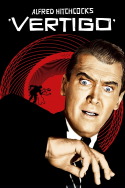
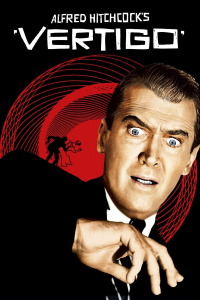
Review of Vertigo (1958) by Brandon S — 09 Sep 2015
No filmmaker will ever capture a moment the way Hitchcock did. His precision, his elegance, his humor, his unmistakable confidence. Alfred Hitchcock was the most influential filmmaker to ever live, and this is one of his most towering works.
No shot in a Hitchcock film is a matter of happenstance. There are no happy accidents on a Hitchcock picture, because every frame is so carefully conceived and determined.
What makes "Vertigo" a masterpiece isn't just Bernard Hermann's complex score or Jimmy Stewart's authentic performance or even the mystery of Kim Novak's character, but rather the act of unfolding the story and the changing perspectives.
Cinema is a type of language with many different dialects. There are films that speak with spirituality and profundity. Films that speak with naturalism and authenticity. Other films speak romantically with great melodrama and theatricality. Alfred Hitchcock simultaneously speaks all three at once in his films. There's a strong subtext that lives in a realistic world, but at the same time it's clear that we're in the hands of a master of romanticism.
In the grand scheme of things there are three filmmakers that cemented themselves in cinema as the most important names in narrative cinema history: John Ford (The Searchers, The Grapes of Wrath), C.B. DeMille (The Ten Commandments, The Greatest Show on Earth), and, of course, Alfred Hitchcock. Directors everywhere owe a great deal to the films of Alfred Hitchcock, and "Vertigo" is no exception. While "Psycho" remains my favorite of his films, "Vertigo" is, in a word, perfect.
This review of Vertigo (1958) was written by Brandon S on 09 Sep 2015.
Vertigo has generally received very positive reviews.
Was this review helpful?