Review of Vengeance Is Mine (1979) by Jack F — 22 Jun 2007
June 23, 2007 - Pacific Film Archive, Berkeley (New print).
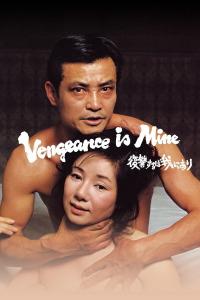
Imamura traces the origins of Iwao's "revenge" to a primal scene of humiliation that is familiar enough. The son of a Catholic shipper in the Goto islands sees his father humiliated by a naval officer who has come to requisition the community's boats. The 8-year-old's attempts to defend his father with a club earn him a slap in the face and rebuke. Paternal authority and the child's belief in justice never recover. As we see Iwao turn from a conman into a murderer cum trickster, who ends up killing for no reason, without taking pleasure in the violence either, it becomes clear that the film's protagonist has forsworn any order that might include a vengeance that effects retribution or just punishment. The only thing that Iwao pursues is money to pay for the next motel and prostitute. What looks like a hint of charity to a madam and her mother, a former killer herself (Iwao recognizes her as such and comments on her "interesting" character), is vitiated by his last senseless murders. Along the way, Iwao again finds himself powerless in the face of violence committed against someone whom he seems to love. As his father tells Iwao before the latter's execution, "you are too weak to kill the people you hate; you only kill those who have done no harm to you.".
The complex relationship between the devout father - who emerges as a real-life (i.e., to say, imperfect) saint - and Iwao's wife forms another subplot familiar from some of Imamura's other films. Played by Mitsuko Baisho, who starred as the suffering madam in Imamura's Eijanaika, she is a the kind of heroine whom we know from the director's other films.
This review of Vengeance Is Mine (1979) was written by Jack F on 22 Jun 2007.
Vengeance Is Mine has generally received very positive reviews.
Was this review helpful?