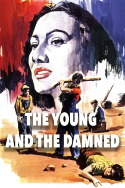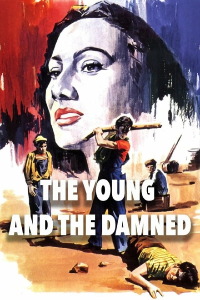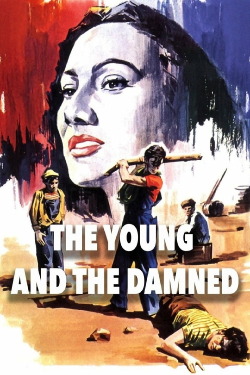
Review of The Young and the Damned (1950) by Kevin N — 11 Apr 2009
A gritty social drama which works in both a neorealistic manner and in a deeply personal surrealist fashion. The images on screen always seem like part of a documentary; the disturbing violence which fills the film works so naturally as a commentary on what murder means to us as spectators and what it means to the children who commit it here.
There is no doubt of the effects it has: Jaibo's monsterous rage and desensitization works an opposition on us, and the toll that violence takes on little Pedro is also a heavy burden for us. Though this is presented mostly as a straightforward narrtive, Bunuel uses his surrealist touch to make dreams integral to feeling and symbols key to our understanding of the themes.
Chickens are particularly recurring as a metaphor for weakness, and some of the most frightening scenes seem to take root around the naive animals. The most affecting scene in the film may be the last; a boy is animalized as the subject of a tragic act of maliciousness and the sequence is framed to be an identicle match of a similar one in the director's early documentary, 'Las Hurdes'.
There are no compromises taken; sexual desire is handled in a barbarically fetishistic manner and motifs of cruelty flood the film's reels and corrupt us seemingly directly. This is an unflinching masterpiece from one of the art form's most provocative visionaries.
This review of The Young and the Damned (1950) was written by Kevin N on 11 Apr 2009.
The Young and the Damned has generally received very positive reviews.
Was this review helpful?