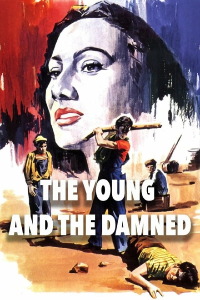
Review of The Young and the Damned (1950) by Diego M — 25 Mar 2010
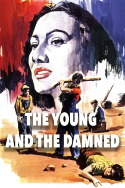
Italy was showing the world the effects of World War 2 on the lower classes thanks to Vittorio De Sica et al, but how many people knew about the poverty in Mexico? The opening voiceover for "Los Olvidados" explains that every major city in the world has a poor district that is seldom seen, Luis Bunuel wanted to expose the poorest areas of Mexico City for the whole world to see. Recent films like "City Of God" and "Amores Perros" can take a more stylised approach to the poverty in South America because the harshest aspects of life in the slums are known relatively well enough already, Fernando Meirelles + Alejandro Inarritu along with many other South American directors can thank Luis Bunuel for paving the way forward.
Things weren't going too well for Bunuel before the release of "Los Olvidados": After his controversial short "Un Chien Andalou" shocked the world 22 years earlier and his first feature "L'Age D'Or" was banned upon release, he made his documentary "Las Hurdes" in 1933 and later had to leave Spain to get a couple odd jobs in America to bring some money in. After settling in Mexico in the 40's he made a couple commercial films before he got the chance to direct "Los Olvidados" with unprofessional actors on a tiny budget. This managed to work to his advantage, as the slums and faces of all the characters looked dirty, downtrodden, realistic.
There are many characters in "Los Olvidados" but most of them revolve around recent prison escapee Jaibo who is determined to find Julian, the guy who signed his prison sentence who suffers from an alcoholic father. Pedro is the ray of hope in the story, he may run with the gang Jaibo appoints himself as leader, but he's mostly ignored by his workaholic mum determined to put food on the table for her 4 children (Pedro is the oldest). As the story continues and thanks to a brilliant dream sequence, Pedro realises he must find a job to ease his mother's work schedule and possibly escape from hanging out with all the punk teenagers his mother detests. An orphan nicknamed Small Eyes is taken in by the elderly Don Carmelo, a blind street musician who is the first victim of Jaibo's gang (after they fail to rob him, they beat him), who goes every morning to pick up milk from Meche's grandfather.Meche is the sweet little girl who cares for Small Eyes, but her brother lets Jaibo (who sleeps in their barn) have his way with Meche whenever he wants, unbeknownst to her grandfather.
This is a bleak story where the fate of the good is seemingly dictated by the bad: Pedro's attempts to break free of a life of crime is thwarted by Jaibo at every turn. Meche is probably the nicest person in the entire film yet it is implied that she is occasionally raped by Jaibo and by Don Carmelo thanks to her uncaring brother. Small Eyes is happy to be taken in by Don Carmelo but is mistreated by the blind man when he discovers Small Eyes talked to Jaibo (he bumped into Small Eyes by chance who isn't even friends with Jaibo). Almost nobody in the film is completely innocent, but when Don Carmelo shouts that all the kids "should be killed before they are born", it sounds horrific yet considering how badly he has been treated by Jaibo and his gang his animosity is understandable, albeit extreme.
The dynamics between the older and younger generation is where Bunuel places some, not all of the blame for the current situation in the slums: The adults resent their kids for turning to crime and staying out all night, while the kids resent their parents for not spending enough time with them whether it's due to overworking or overdrinking. But if the adults realised their responsibilities in taking care of their children, and if the teenagers understood that their parents can't work themselves into the ground forever the situation would start to look up. A lesser director would have placed the majority of the blame on the Government for allowing the slums to reach such a level, but Luis Bunuel suggests that society needs to ultimately take personal responsibility for the welfare of everyone in order to improve.
Bunuel's primary objective when making "Los Olvidados" was to show the world the true extent of poverty, his reward was receiving Best Director at the Cannes Film Festival, although the response in Mexico wasn't as positive (it only lasted 3 days at the Cinema due to excessive rioting because of the shocking nature of the film). Luis Bunuel may have made his name by attacking the Church and the conventions of Cinema, but with "Los Olvidados" he proved he was equally adept at attacking the actions of everyday people in a style reminiscent of Italian Neorealism. A damning social commentary and a human examination of the generation gap that threatens to tear society in half, "Los Olvidados" still possesses the same power it had 60 years ago, the only disappointing aspect of it is that those same problems it showed all those decades ago are still running rampant today.
This review of The Young and the Damned (1950) was written by Diego M on 25 Mar 2010.
The Young and the Damned has generally received very positive reviews.
Was this review helpful?