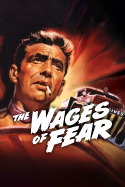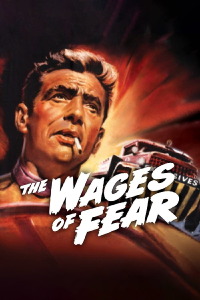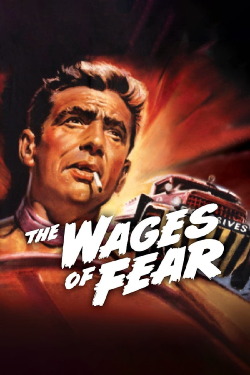
Review of The Wages of Fear (1953) by David K — 29 Mar 2009
This is a very intelligent and extremely nerve-wracking masterpiece thriller from the master of his craft, Henri-Georges Clouzot. "The Wages of Fear" is mostly known for its unrivaled "edge of your seat" sequences. And they're good. They're really good. But the film has an underlying and more important concern than just getting two trucks full of nitroglycerine from point A to point B. The film is more concerned with post-WWII imperialism from the "winners" of the war. Most notably; America.
I don't want to say that "The Wages of Fear" is anti-American. Then again, I can't really say the film ISN'T anti-American. It's just challenging the contemporary world of 1953. It's questioning what make's a man a man. (It's by no coincidence that all 4 protagonists are homosexuals.) What's courageous? Should a man be sympathetic? Most of the conversations held in this film is between two men, each one representing an opposing viewpoint. What's interesting is that no side is ever presented as being right or wrong. Clouzot wonderfully uses an unbiased camera to unveil a contemporary humanity that is profoundly disturbing.
The film is curious about the sacrifice made for a dollar. Is capitalism really the way to go? We are shown poverty stricken men driven to put their lives on the line in order to "get out" of that poverty. Luigi (who looks like Mario from the video game) is already on the verge of death because he has been working so hard for an American oil company. We are constantly shown true "social outcasts" in the form of natives and various "third-world" cultures. They are always alone, and always watching their world being taken over and destroyed.
I think it's safe to say that this film is probably the most pessimistic film I've ever seen. "The Wages of Fear" holds up a mirror to the world of 1953 and unbiasedly horrifies the audience. How could it not horrify us? Clouzot presents a world where people are obsessed with gaining an "advantage" and then celebrating too early when the goal is met. We see thoughtless, selfish, and uncaring men. We are shown delusional women who just want a family, and nothing else. After "The Wages of Fear," I really think the scariest image we ever see is our own.
This review of The Wages of Fear (1953) was written by David K on 29 Mar 2009.
The Wages of Fear has generally received very positive reviews.
Was this review helpful?