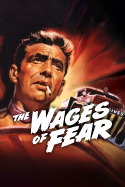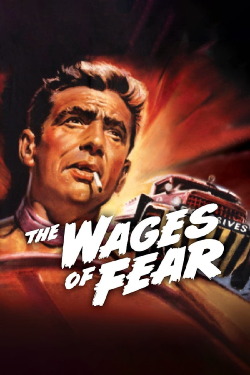
Review of The Wages of Fear (1953) by Joseph B — 22 Apr 2016
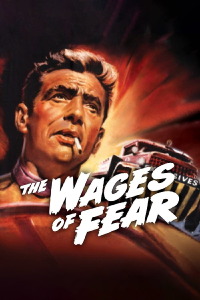
"The Wages of Fear" perfectly demonstrates what it means to be on the edge of your seat. It is nothing but pure excitement made by the French director Henri-Georges Clouzot. Films don't get much better than this and certainly films that are more than sixty years old don't get that much more exciting. It's an absolute nailbiter. Superbly adapted from the Georges Arnaud novel "Le salaire de la peur" by Clouzot and Jerome Geronimi, the characters come to life with fully realized ambitions, fears, anxieties and dreams.
Set in a small Mexican village surrounded by desert with its only link to the outside world being a small airport whose airfare is much too expensive for the out of work foreigners who pass the time idly at the local tavern. Some find work doing odd jobs here and there for enough money for food and alcohol, but not much more. The village is dominated by an American oil company called Southern Oil Company (SOC) who controls many oil fields in the area. For the most part, if you find yourself in this village with no money and no prospects for work, you're pretty much stranded there.
Mario is played by Yves Montand, a Frenchman who starts to bond with a newcomer to the area over their shared experience of living in Paris at one time. Jo (Charles Vanel) is an aging gangster with a past relationship with the foreman at SOC named Bill O'Brien (William Tubbs), but this relationship isn't explained. The Italian Luigi (Folco Lulli) has been saving up his money doing odd jobs, but he is constantly referred to as a miser. Bimba then proceeds to buy the tavern a round of drinks prompting antagonism from Jo almost esculating into murder. The Dutchman Bimba (Peter Van Eyck) is the fourth out of luck foreigner introduced. They all dream of leaving southern Mexico and returning back home.
Their opportunity arises after a fire erupts at an oil field killing thirteen SOC employees. The townspeople are furious that their lives are taken for granted and they are paid so little. O'Brien and other executives come to the conclusion that the only way to put out the fire is to use nitroglycerine to cause an explosion to put the fire out. The only way to get the nitroglycerine to the oil field is to drive it in jerrycans on the flatbed of a large truck across 300 miles of horrible roads making sure not to hit a bump too hard or go too fast or too slow. The union would probably not let their members take such a dangerous job so O'Brien recruits the foreigners knowing they will do and offers to pay $2,000 each.
The suspense that these four characters are literally sitting on a bomb that could go off at any time drives the film for the last hour and a half. There's two truck driven by two men, Mario and Jo in one and Bimba and Luigi in the other. Montand and Vanel are the stars and the film focuses on them more than the other two. Jo, who O'Brien thought was too old, connives his way into being the fourth driver. Once taking the wheel he seems unsure and scared and perhaps Mario is thinking he is too old, too careful driving to the point it may kill them both. Jo's doubt and skittishness causes Mario to treat him horribly as the two get to know each other better along their 300 mile trek.
Speeding up, slowing down, backing up are all moments that cause alarm and Clouzot does it all with such precision and care. Having two trucks trying to stay a good distance apart for fear of explosion leads to some miscommunication when the other team needs to be warned for dangers ahead. There are many obstacles along the way that make for some exciting action. As the audience, you want nothing more than to see these guys succeed. Much of the suspense in the film contain no music and it's just painful silence.
The film was supposed to be filmed in Spain but Montand refused to film in Spain as long as Franco was in power so Southern France filled in for Southern Mexico. The role of Jo was originally offered to Jean Gabin but he turned it down and Vanel jumped to the opportunity. Montand was not known as a dramatic actor before this film but he does a terrific job and has good chemistry with Vanel.
For the U.S. release about seven minutes was cut from the film because it was deemed too anti-American because of the film's depiction of the oil company in Central America. At one point, Jo even asks Mario, "There's Americans here?" to which Mario responds, "Wherever there's oil." The cuts led to a confused movie with unclear motives and maybe to some this is "anti-American" but it seems more against foreign businesses exploiting local workers for cheap wages and horrible working conditions.
This review of The Wages of Fear (1953) was written by Joseph B on 22 Apr 2016.
The Wages of Fear has generally received very positive reviews.
Was this review helpful?