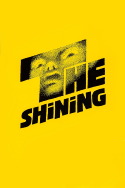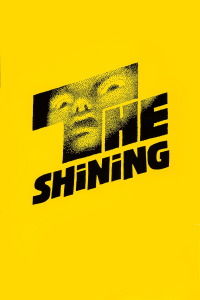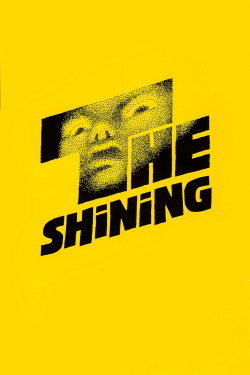
Review of The Shining (1980) by Brett C — 23 Dec 2014
Review In A Nutshell:
Has there been anybody who has left a larger print of cinema as much as Stanley Kubrick? This man, who's cinematic career spans up to 48 years and has produced only 13 films within that time frame, is a chameleon. This is a figure who could tackle any subject or genre and does so surpassing everything that genre or concept had to previously offer. What was science fiction before 2001: A Space Odyssey? What were war films before Paths of Glory? What were period films before Barry Lyndon? What was horror before The Shining? All of these genres before the time of Kubrick's entry were only glasses filled half-full; directors unable to see the potential or lack the bravery to fill that glass.
Though all of these said films are regarded as masterpieces and influential pieces of art in contemporary minds, but at the time of their release some were panned by the general community, unable to see the innovations and thematic value that these films had to offer. It is the same with my first viewing of these films, though many have already proclaimed to me that Kubrick's films were art of the highest form, but I was not easily convinced, as I expected cinema back then to be more immediate and in a way more predictable, finding frustration towards films that were more intelligent than I; but now, my outlook on cinema and life is much different, I have grown and learned things, seeing stories, characters and themes in a different angle, being able to empathise with the intentions of the filmmaker behind the camera. Kubrick's films as I repeatedly visited them have become clearer in the appearance of themes, but like all of Kubrick's films, it still requires patience and active engagement in order to find an interpretation of his metaphors and symbols.
The Shining begins with a helicopter shot tracking a single car driving through a long and winding road that eventually leads to the isolated hotel, The Outlook Hotel, close to the mountains. Just on that scene alone, character development has already started to build; a representation of Jack Torrance, traveling closer and closer to the land of madness. Of course, the film does not give itself away entirely within the first couple of minutes; the seed has been planted; now we are simply waiting for it to grow. It is already abundantly clear that something already is wrong from the minute we get a close glimpse of Jack's face, which was during the interview with the Hotel Manager; we see Jack's face kind of light up, enticed by his environment, then a little later we see him driving up to the hotel with his family, showing his face filled with disappointment and quiet frustration, only to be lit up again with the topic of cannibalism comes to conversation.
Reaching the hotel, subtly an insidious and mysterious atmosphere start to build, emphasised greater as we see more of the hotel itself. From there once human isolation is firmly established, internal friction between Jack and his wife, Wendy, starts to build, but done so with uncomfortable slowness that it can be easily overseen. Days and months pass, snow starts to fall and slowly build, pushing up against the outside walls of the hotel, forcing the Torrance family to stay indoors and become further and further away from outside human contact. As this external pressure from the snow is occurring, internal barriers inside the mind of Jack are crumbling, like as if his demons are fighting to be free from the shackles of self-control and rationality; both internal and pressures have caused Jack a sense of claustrophobia, which Kubrick allowed to be also conveyed to its audience, conjuring up hallucinations in the process. As this pressure starts to build, the atmosphere becomes more radical, creating a world far from our realities, bringing to the surface our internal fears, constant feelings of confusion and unable to control our deepest of emotions.
It also during the second act of the film where Jack's previous life is thoroughly explored, hearing the tragic events of his past life from his perspective; and Kubrick emphasising the role of alcohol in his ultimate road to madness. It was during the scene where he takes his first drink of an alcoholic beverage where walls of sanity has broken down and have begun to consume his mind like a cancer, though Kubrick executes it as a hallucinogenic and metaphorical experience for Jack rather than through the lens of reality. It was also during these moments that I begin to think whether his madness was primarily caused by the sudden onset of human isolation, or has his rage and thirst for murder been present long before caused by the disappointments and guilt of his past. I have yet to decide which of the two theories I mostly agree on, but whichever I pick, it wouldn't change how I ultimately feel towards the film.
Eventually all this build up leads to a tense and horrifying climax that exposes its characters and the hotel at its most primal; displaying murder and madness at its most intense, placing the audience along with Wendy and Jack in a complete state of fear, from a man whom they used to recognise. Kubrick does not give the audience a sense of relief, pushing the feeling of claustrophobia at its limit, creating threats from almost every possible angle, leaving us in a complete state of panic. It all eventually resolves in a maze chase with a limping Jack chasing after his son Danny. This scene emphasises the intelligence and elusiveness of Danny, symbolising the road-runner from the Looney Toons program he watches previously in the film; Jack and his desperation for murder, represents the coyote, in which both have giant egos, attempting to prove something, possibly to the figments that reside in his mind. It is the idea that Kubrick has placed a lot of thought and detail into his finale that makes The Shining a special product of the genre; it does not simply aim to shock and terrorise; it also respects its characters and the larger themes that have been running throughout the entire film.
As all this was happening in the maze, the film cuts back and forth to Wendy navigating her way around the hotel, attempting to find her son. It is here that her overwhelming state of fear blended with the hotel's state of complete horror and madness has revealed the historical bloodbath that stained these walls. Initially it comes off as an internally frightening and confusing experience as the film seems to bombard you with intense and ambiguous imagery with such relentlessness; not knowing what to do with what he have just seen. Through subsequent viewings, it becomes less horrifying and instead becomes food for thought on the film's ultimate mystery; the ending that possibly points to a massacre in the 4th of July, 1921. It raises questions like whether or not the face of Jack Torrance is the actual face that Wendy and Danny sees, as his face could possibly act as a symbol of passionate slaughter; or are these murderous events that took place in the Overlook Hotel a cause of psychological pattern or supernatural manipulation. A clear answer is not given, and we are left to use our minds to formulate our own beliefs of what it all signifies.
Like all of Kubrick's post-Spartacus films, an atmospheric visual trademark is found that emphasise the film's larger themes and the internal emotions or drives of his central protagonists. In The Shining, we are treated to fluid and stylish photography, through the brilliant use of the Steadicam, which allows shooting to not be restrictive, to provide constant movement without the hiccups of shaking and blurriness, and it provides opportunities to create long takes of the actors' performances. Its usage in this film emphasises a sense of horror, sometimes following actors at a close proximity, feeling the sense of tension in every corner we turn. It also creates heavy tension during scenes of extended tracking; Danny traveling through corridors in his tricycle and the climactic maze chase. These scenes are shot close to the ground with such fluidity and minimal cutting that I was gripped throughout the entire time; the choice to have the camera be positioned so low may be to capture the perspective of our young protagonist Danny, or in the maze scene, to capture the horrifying entrapment and claustrophobia that comes with being in one.
The musical score of the film, composed by Wendy Carlos and Rachel Elkind, is present to further emphasise the darkness of the material. The score transitions back and forth between quiet and loud moments, surprising us with every turn. The non-original tracks in the film also achieved the same feeling as the original score; inherently dark and aims to emphasise the atmosphere and its characters.
The Shining arguably the strongest performances from its cast, with Jack Nicholson as the transitional murderer truly owning the role; capturing the dark and insidious nature of his role through chillingly blank stares and devilish grins; supported and emphasised when under the direction and lens of Stanley Kubrick. The same goes for Shelley Duvall, whom we get to see at her most raw, with scenes that encapsulated the essence of psychological and emotional terror, like as if Kubrick provoked her in some way before or during shooting to create such natural responses. The highlight of the cast's performance is during a tense encounter between Nicholson and Duvall, with Nicholson slowly approaching her as she also paces away from him whilst swinging a bat to maintain distance. It was Nicholson's ability to torture not only Duvall's character but also us, the audience, seemingly getting closer to us physically and mentally with each upcoming step.
The Shining is an example of a film that seemingly becomes more intelligent and frightening with each subsequent viewing. It sidesteps the stereotype of sudden jump scares and substitutes them with something more personal and intimate; creating a sensible balance between the psychological and supernatural. To those who think less of this film, ensure to come back every once in a while as you might find something valuable that you initially missed; or if you simply refuse to value this film for what it is truly worth, then I'm sorry I may have to "correct" you.
This review of The Shining (1980) was written by Brett C on 23 Dec 2014.
The Shining has generally received very positive reviews.
Was this review helpful?