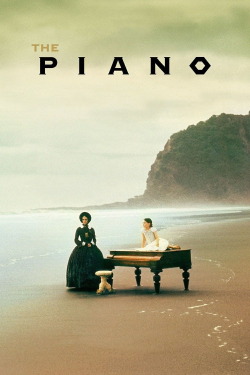
Review of The Piano (1993) by Agape U — 23 Oct 2014
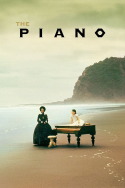
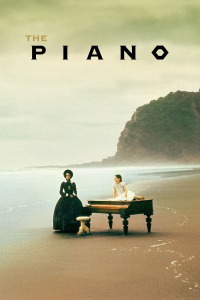
The Piano is a critically acclaimed film by director Jane Campion that won 3 Academy awards including best original screenplay. It is set in the mid-19th century and tells the story of Ada McGrath, a mute single mother who is sold into marriage by her father to a New Zealand frontiersman named Alisdair. Not long after her arrival in New Zealand Ada's new husband sells her most prized possession-her piano- to a neighbor called Baines despite her relentless objections. As part of the deal Alisdair makes with Baines, Ada is to give Baines piano lessons. Baines however is not really interested in learning to play the piano; he wants to seduce Ada and offers to return her piano in exchange for intimacy. Ada can earn her piano back, key by key, by engaging in increasingly more intimate acts with Baines. However when Baines realizes that Ada is simply tolerating their encounters so that she can get her piano back and does not have any genuine feelings for him he suffers a crisis of conscience and gives her back her piano outright. It is not long though till Ada realizes that she misses having Baines watch her play the piano and they start having an affair that is eventually discovered by Alisdair. When Alisdair's warnings to Ada to stay away from Baines are ignored he violently cuts off one of her fingers and threatens to cut off more if she ever contacts Baines again. One night during an attempt to rape Ada Alisdair hears what he believes to be Ada's voice telling him to let her go be with Baines. Deeply shaken by this, Alisdair agrees to have their marriage nullified and allows Ada and her daughter Flora to go be with Baines.
To its credit, The Piano has many attributes that warrant its high acclaim among film critics and viewers alike. The film is rich in symbolism and provides commentary on deeply important and complicated moral issues. For instance, Ada's muteness is a symbol for what little say she has in her own life. She is married off by her father without her consent; her possessions are sold by her husband despite her objections; and she is not allowed to leave her loveless marriage until her husband allows her to do so. The film also poses complicated moral questions. Is it ever ok for a married person to engage in an extramarital affair? If so when? How far can a betrayed mate take their indignation without crossing the line and becoming culpable themselves?
The film also creates complex and nuanced characters that cannot simply be labeled as "good" or "bad". For instance viewers can sympathize with Ada because she is mute, a victim of circumstance and stuck in a loveless marriage. However she is also short tempered, haughty and engaging in an extra-marital affair. Baines genuinely cares for Ada but his initial attempts to win her over are crass at best and downright creepy and perverted at worst. Ada's young daughter Flora is also not all together sympathetic. She is an intelligent, creative and inquisitive young girl but her lack of propriety and her disobedience of her mother ultimately results in Ada losing her finger. Even the more sinister characters in the film are colored in wonderful shades of grey. Alisdair is cold, vengeful and ruthless but one can't help but feel a tad bit of sympathy for him because when he married Ada he had a reasonable expectation of receiving love, affection and intimacy from her but instead she wants nothing to do with him and reserves all her affections for another man. This ability of Jane Campion to create characters that are both complex and compelling is truly formidable; she gets her audience to emotionally invest in characters and their stories without turning them into moral paradigms or the embodiment of evil.
Also of vital importance is the film's soundtrack. As the film's title implies, the piano plays a very important role in movie. The piano is afterall Ada's voice piece and the music she plays is often indicative of her mood. For instance in one scene she is playing a slow light melody on her piano during her lesson with Baines. But when Baines starts touching her she quickly starts playing a fast paced loud song to communicate her displeasure at him touching her.
Another interesting aspect about the film is how the sex scenes where shot. Often times when films depict nudity or sex they use fast cutting editing so that the audience can recognize that the characters are having sex without actually having to depict the whole sex act on camera. However The Piano did not take this approach and the director held the shot for a long time during the sex scenes; almost to the point where it was uncomfortable to watch. But it was necessary because the sex scenes are important to the plot. Ada being mute means that she and Baines cannot engage in conversations where the audience can get a feel for their affection for one another. But by depicting the tender way they made love to one another Campion manages to say more about how they feel about each other that she could have through several long dialogues.
With all that being said however I was not as taken with this film as most critics. The characters were complex and nuanced but they lacked depth. That might sound a bit like an oxymoron but allow me to explain. The characters were neither all good nor all bad which is true of all humans and hence why I say they were complex and nuanced. However Campion failed to adequately explore the more redeeming aspects of her protagonist's character and what her motivations were which left me feeling a bit ambivalent to the outcome of the story. Why were Ada and Baines so in love anyway? Why should I root for their adulteress union to be successful? Ada's situation isn't inherently sympathetic. Before she started having an affair with Baines her husband had his flaws but he was not completely irredeemable. Therefore Campion should have spent more time establishing the basis for Ada and Baines love for one another. She should have spent more time exploring the better parts of Ada's personality so that the audience could sympathize with her more hence reducing the cognitive dissonance about rooting for adultery. Perhaps my desire for a more sympathetic protagonist is more of a reflection on my inability to adequately deal with cognitive dissonance than Campion's ability to create compelling characters but I left the film feeling a bit dejected and not all together satisfied. However I will concede that the film was a beautiful piece of art, just perhaps not my cup of tea.
This review of The Piano (1993) was written by Agape U on 23 Oct 2014.
The Piano has generally received very positive reviews.
Was this review helpful?