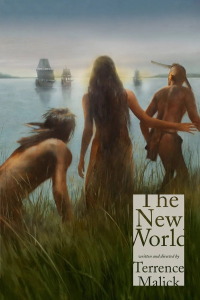
Review of The New World (2005) by Chris E — 10 Jan 2010
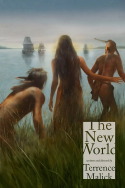
Never has Malick so clinically and overtly sketched a vision of worldhood from Heidegger. This is essentially a second shot at the subject of The Thin Red Line, employing many of the same devices - the natural world, the built environment, conflict, loss, being together - but introducing many more central pillars - inhabiting, co-habiting, systems of objects and relative understandings of them, networks of meaning, our nature and its relation to culture, violence (a Nietzschean nature), faith and the rebirth of love (a nature from Kierkegaard).
The whole story arises from the phenomena - the sensual experience of grasses, trees and skin, or of steel, timber beams and pike-handles; sounds of language in European and aboriginal modes; the warring, subversive influences of the heroes' monologues and European romantic music.
As a piece of philosophy, it is a fascinating existential inquiry. The story of the colony, of empire, of the obliteration of native civilisation, the experience of the colonised, the conqueror - all of these are in there, and all connect on one level or another to individual experience, in war or in love, loss, and recovery.
As an historical experiment, an attempt to bore to the lived experience, it is terribly exciting. And as a film, its execution, in all richness and depth, its pared-down simplicity in script and structure, its meandering length, make it a remarkable achievement.
One could argue The New World is a little baggy, and that its story arc won't appeal to everyone, but it is quite extraordinary that such work can make it out of Hollywood alive, let alone in such fine shape.
This review of The New World (2005) was written by Chris E on 10 Jan 2010.
The New World has generally received positive reviews.
Was this review helpful?