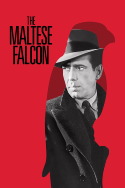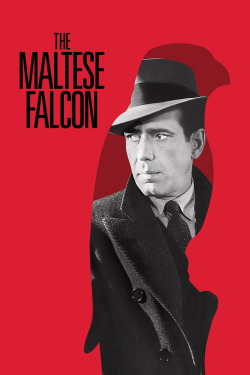
Review of The Maltese Falcon (1941) by Hunter V — 16 Oct 2008
[font=Palatino Linotype][size=3][i]The Maltese Falcon[/i] is recognized as a archetypal film noir, this film succeeds in drawing the viewer into a complex mystery that eventually causes the viewer to associate with the characters on screen. The film begins with an introduction to two of the main characters in the movie, Sam Spade and Brigid O?Shaughnessy. We are immediately able to recognize that Spade is a private investigator and that O?Shaughnessy is a potential employer. The two characters engage in a conversation in Spades office where O?Shaughnessy is visibly uncomfortable and uneasy. At this point in time they are also in a dimly lit room, there are dark shadows and the light sources are coming from outside of the windows in the scene. Although Spade?s partner, Archer, is walking around the room and contributing to the conversation, Spade is and O?Shaughnessy are the center of attention and Archer is reduced to an extra while the three are in the room together. This introduction to Sam Spade and O?Shaughnessy prepares the viewer for their interaction that will continue throughout the movie. Archer is subsequently murdered in the next scene, further enforcing the idea that he was just an extra to begin with.[/size][/font].
[font=Palatino Linotype][size=3] I noticed that a large percentage of the film was long-shots of the characters. This was done for a number of reasons. First of all, since this film is a mystery/suspense we as the audience are participating in solving the mystery that Spade is solving. Long-shots provide us with a larger scope of the scene. We are able to examine the props on screen and watch the characters reactions to their interactions. Spade is also a character whose movements contribute to his on screen personality. Long-shots allow the viewer to watch Spade?s, Humphrey Bogart, mannerisms and motions that are easily recognized as ?cool? and laid back. Scenes where Spade gets in physical confrontations, like the scene where Spade punches Joel Cairo and takes his gun, are unrealistic but the ease and the comfort that Spade displays when engaging in the confrontation make his character appear more powerful and slick.[/size][/font].
[font=Palatino Linotype][size=3] I also noticed that the long-shots would zoom in during the conversations between the characters to provide the viewer with eye-level close ups. These close ups gives us the characters emotions and reactions on a personal level. Whatever beliefs or suspicions that Spade or even the viewer has is emphasized by these shots. The transitions are smooth and regular, providing us with both the mannerisms of the characters and the close up reactions that the characters have to one another in their interactions. [/size][/font].
[font=Palatino Linotype][size=3] This movie is a mystery where both Spade and the viewer is constantly trying to solve the puzzle of the Maltese falcon. The camera in essence becomes the viewer who is following Spade in his detective work. And although we are not made aware of what Spade knows until he reveals the details of the mystery, the camera literally follows Spade. When Spade is walking around town on the streets there are camera angles taken from behind him. Also, when he enters and leaves buildings the camera shows him walking toward the camera and then walking away from the camera. The viewer is placed behind Spade, which acts as a physical metaphor of how we are also behind Spade in his thinking process when it comes down to solving the crime. [/size][/font].
This review of The Maltese Falcon (1941) was written by Hunter V on 16 Oct 2008.
The Maltese Falcon has generally received very positive reviews.
Was this review helpful?