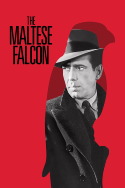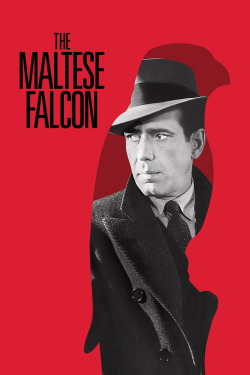
Review of The Maltese Falcon (1941) by Kylie P — 18 Feb 2010
From August 26, 2008:
The main character of The Maltese Falcon, Sam Spade, is one of the most engaging and well-rounded characters in film. His motivations are clear; his dialogue is snappy, witty, and intelligent; and his presence is charismatic because Bogart was an incredible performer and a true film icon. He's hands-down the best part of the whole film.
The worst part of the film is Brigid. It may not be Mary Astor's fault, but that's hard to know for sure without reading the original book. In the film, her motivations, other than sheer greed, are never clear because her character is always driven to lie - yet, there's no background information provided as to why it has become so necessary for her to chase after the Falcon and lie so much, except for the danger of the quest itself. The film establishes early on that there are no perfect heroes or villains; everyone is morally ambiguous and self-serving, not the least of which includes Spade. Yet, Brigid's story offers no explanations past a few brief and forgettable comments regarding her exploits in pursuit of the Falcon. Maybe it's the year in which it was made, and the archaic sexism of the day, playing on the notion that she is of the weaker sex, that renders this character to such a diminished role, portraying Brigid to be the biggest sinner of the lot - almost an Eve-type, wanton to temptation. While Cairo's involvement is equally glossed over, he's comparatively minor in the grand scheme of the plot. Still, Brigid never feels like a sympathetic character because, the way it was written, she offers no reason why she should be sympathetic, even when she finally decides to offer crumbs of the truth.
No technical elements of the film stood out. The point-and-shoot direction of John Huston in his directorial debut was fairly straightforward, as were other elements like art direction, costumes, even score. The pace was slow yet even. The allure of The Maltese Falcon rests largely on the charisma of Bogey and the allure of the mystery around the titular object - after all, it's the "stuff that dreams are made of." It was also groundbreaking in terms of setting the tempo for those films classified as "film noir" to follow, creating the requisite ingredients by being the first film to employ them.
This review of The Maltese Falcon (1941) was written by Kylie P on 18 Feb 2010.
The Maltese Falcon has generally received very positive reviews.
Was this review helpful?