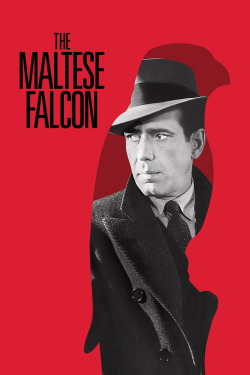
Review of The Maltese Falcon (1941) by Nick R — 24 Dec 2008
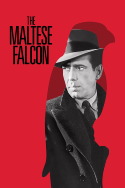
By 1941, Dashiell Hammett's great private eye novel had been acceptably filmed twice, under its own title in 1931 with Ricardo Cortez as Sam Spade and as Satan Met a Lady in 1935 with Warren Williams as the Spade character (and a falcon McGuffin turned into the Horn of Roland). John Huston, having served an apprenticeship as a writer, selected the book from Warner Brothers' catalogue of properties and was so confident in the strength of his material that his script consists essentially of a transcription of Hammett's dialogue. He was fortunate enough to have a letter-perfect cast down to the smallest bit parts, and the restraint not to go over the top. This debut feature has little of the razzle-dazzle of the same year's Citizen Kane, announcing the arrival of an enfant terrible but of a consummate professional.
Often considered a cornerstone of film noir, The Maltese Falcon is sparing in its use of symbolic shadow-which are withheld until the elevator door casts jail-bar shapes across the face of the duplicitous heroine at the end-and takes place almost entirely in anonymously tidy hotel rooms and offices worlds away from the seedy glamor of The Big Sleep(1946) or Murder, My Sweet(1944). Humphrey Bogart, graduating from bad-guy roles to tough romantic heroes, is San Francisco private eye Sam Spade. A sharp-suited businessman who is out to bring in the murderer of his partner and thwart a group of treacherous adventurers who have become so caught up in the search for the fabulous jeweled bird of the title that they make the fatal mistake of assuming everyone is as corrupt and greedy as they are. Mary Astor might at first glance seem a little matronly for a femme fatale, but her strange primness in tight suits and tighter hair style is weirdly apt for a woman who always has a backup lie in place. Sydney Greenstreet's talkative, obese, self-delighted Kaspar Gutman and Peter Lorre's polite, sad, scented, whiny Joel Cairo are screen immortals, a Bing and Bob or Laurel and Hardy of crime, with perennial loser/fall guy Elisha Cook Jr. as the angry little gunman Wilmer who is doomed always to be on the outside of the deal.
Hammett's reputation rests on his addition of a certain social realism to the American mystery story, with private eyes who are solid professionals rather than supersleuths. He was also addicted to plots as twisted and bizarre as Jocobean drama-The Maltese Falcon climaxes not only with the hysterical punchline that the black bird everyone has been scheming and killing to possess is actually a fraud but also the classic moment as the detective admits that he loves the murderess but is still going to let her get hauled off to jail. Whereas other great Hollywood directors pursue their own visions, Huston continued to be at his best-from The Treasure of the Sierra Madre(1948) through to The Asphalt Jungle(1950), Fat City(1972), Wise Blood(1979), and The Dead(1987)-when making faithful adaptations of minor classic novels.
This review of The Maltese Falcon (1941) was written by Nick R on 24 Dec 2008.
The Maltese Falcon has generally received very positive reviews.
Was this review helpful?