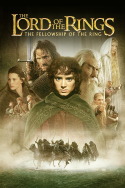
Review of The Lord of the Rings: The Fellowship of the Ring (2001) by Moviemastereddy — 16 Apr 2016
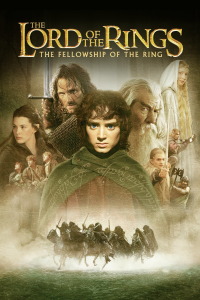
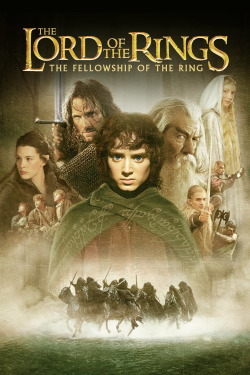
“The Fellowship of the Ring,” the first installment in Peter Jackson’s vigorous and faithful adaptation of J.R.R. Tolkien’s trilogy, looks to please the book’s legions of fans with its imaginatively scrupulous rendering of the tome’s characters and worlds on the screen, as well as the uninitiated with its uninterrupted flow of incident and spectacle.
Partially adapted for the screen once before by Ralph Bakshi in an unsuccessful 1978 animated version, Tolkien’s 1,000-page yarn poses all manner of challenges for a screen transfer — imaginative, logistical and financial. With the final bill likely to come in somewhere near $400 million when production and marketing costs are all tallied, one has to credit New Line Cinema with a tremendous amount of guts for shooting the moon for all three pictures with a young New Zealand director with only one genuinely notable, and small-scaled, film (“Heavenly Creatures”) to his credit.
But Jackson must have convinced someone that he would do it right, a view thoroughly borne out by what’s up on the screen. Evocatively delineating the many aspects of Middle-Earth on tremendously diverse locations in New Zealand in resourceful collaboration with a massive crew, Jackson keeps a firm hand on the work’s central themes of good versus evil, rising to the occasion and group loyalty in the face of adversity, and always keeps things moving without getting bogged down in frills or effects for effects’ sake.
Pic’s main problem, however, is inherent in the odyssey-like structure of the tale; the “and then, and then, and then” nature of the narrative becomes necessarily repetitive and even a bit wearisome at times, and ultimately arbitrary in the sense that one battle more or less with the Orcs, Ringwraiths or Uruk-Hai wouldn’t have made much difference. Lack of dramatic arcs involving rising action, relaxation and interconnecting story strands unfortunately makes the film’s running time feel pretty much like the three hours it is.
It’s all about the ring, of course, the One Ring which, in a potent prologue that out-mummies “The Mummy” in terms of sweeping combat, is shown being forged by the malevolent Sauron as a source of dark power, being lost in battle and finally disappearing for 3,000 years until it’s retrieved by an unlikely Hobbit, Bilbo Baggins (Ian Holm). Perfectly mirroring the opening chapters of the book as if to reassure the faithful millions that its intentions are honorable, film depicts old Bilbo being urged by his old friend, the wizard Gandalf (Ian McKellen), to leave the ring behind for his adopted nephew Frodo (Elijah Wood), who has now come of age but knows nothing of the ring, its legacy or power.
Early stretches are obliged to pack in a great deal of exposition, but screenwriters Fran Walsh, Philippa Boyens and Jackson make it go down easily by mixing in agreeable doses of action and character work. Bilbo takes off but Gandalf keeps turning up whenever he’s needed to mentor the reluctant Ringbearer, who, with his best friend Sam (Sean Astin) and mirthsome buddies Merry (Dominic Monaghan) and Pippin (Billy Boyd), set out from the Shire with one purpose: to return the ring to Mount Doom in dreaded Mordor, where it was created and the only place it can be destroyed, so as to save civilization from the full force of evil that would be unleashed should it fall back into the wrong hands.
Much, of course, stands in their way. For starters, the ring itself “wants” to be returned to evildoers who can fulfill its potential, forces now represented by turncoat wizard Saruman (Christopher Lee), who gathers an army of fearsome fighting monsters in order to capture the gold. There are also relentless Dark Riders, marauding swordsmen, natural catastrophes and airborne spies, which give Saruman a clear picture of where they are.
After innumerable confrontations, fights and close shaves — most cinematically notable an exciting chase in which Arwen, with an injured Frodo onboard, outflanks a posse of Dark Riders — “Fellowship” has its first climax in the Mines of Moria, a corpse-strewn complex of caves and vaulting chambers where the valiant band is attacked by ghastly Orcs, including one giant ogre who looks like the illegitimate brother of a supporting player in “Harry Potter.” Once the group has made its daring escape, it is attacked again in a forest, from which Frodo must flee before setting out for Mordor and the sequel, “The Two Towers.”.
The film also very well handles the matter of perspective and height differentiation between the Hobbits and Dwarfs.
While he has perhaps not written a classic epic adventure score in the manner of Korngold, Rozsa or Steiner, Howard Shore has composed two hours of music that is constantly supportive, creative and complementary to the action. As such, it represents an object lesson that handily points up how unnecessarily intrusive and insufferably distracting John Williams’ work is in “Harry Potter.
This review of The Lord of the Rings: The Fellowship of the Ring (2001) was written by Moviemastereddy on 16 Apr 2016.
The Lord of the Rings: The Fellowship of the Ring has generally received very positive reviews.
Was this review helpful?