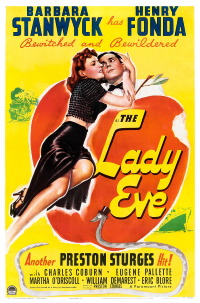
Review of The Lady Eve (1941) by Hunter D — 11 Feb 2011
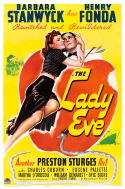
Preston Sturges' witty romantic comedy is unconventional even by today's standards, given dynamic between Henry Fonda and Barbara Stanwyck's characters, who are certainly not equals, and therefore makes this seemingly light romantic tale as delightfully deceptive as Stanwyck's wily lead.
Fonda plays Charles Pike, an heir to a sizable ale fortune who spends his time obsessing over snakes. While on a riverboat from the Amazon bound for New York, he is the most eligible bachelor on the ship, but he is ignorant to advances made on him, his obvious naivete making him the target of a group of cardsharps who are looking to con him out of a chunk of his money, Handsome Harry (Charles Coburn) and his daughter Jean (Stanwyck). Jean, being more sly than the other ladies on the ship, gets his attention by tripping him, pretending his clumsiness broke her heel, appealing to his sense of duty and obligation, and things go from there as she and her father plan to use their new-found friendship to take him to the cleaners at cards. The plan runs awry, of course, because Jean falls in love with the dolt. Of course, in the spirit of the genre, Charles uncovers her true identity, but that's only the beginning, as it's what happens after that things get interesting.
For a film made in 1941, THE LADY EVE is incredibly sexy, far more seductive than any rom-com to come out in the past decade, as the genre is practically dead today. The final shot alone is sexier and funnier than the entire filmography of Katherine Heigl and Jennifer Aniston combines (plus any other so-called stars in the genre). Preston Sturges was a master screenwriter whose work was so sharp-witted it makes Aaron Sorkin look positively dull by comparison. It's not Sturges' best work, UNFAITHFULLY YOURS and SULLIVAN'S TRAVELS are more relentless in terms of the sheer volume of laughs they can get out of you. But seventy years after the fact THE LADY EVE still seems like an original and refreshing rom-com that outsexes its successors in the genre, which probably says more about movies today, but still serves to highlight what a superior work it really is.
This review of The Lady Eve (1941) was written by Hunter D on 11 Feb 2011.
The Lady Eve has generally received very positive reviews.
Was this review helpful?