Review of The Grand Budapest Hotel (2014) by Charliebury — 20 Mar 2014
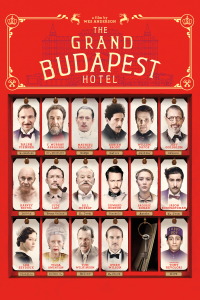
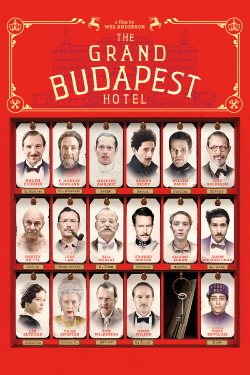
You can either love or hate Wes Anderson, or you can love and hate him at the same time. Unfortunately, The Grand Budapest Hotel has torn me apart. It is undeniably perfect Anderson: obsessive and strict design, colour palettes, composition, framing and blocking. However, it is essentially missing something; my emotions traversed from sheer boredom to stifled laughter to disorderly admiration. My conclusion is that Anderson has become too overworked; I dislike him for this, yet at the same time a part of me admires the man for his precise ingenious.
The film starts and immediately you taste Anderson’s stop-motion style with precise camera panning and boxed framing. The film then jumps through three prologues of time, with the familiar Anderson narration and expose of shots, until we land ourselves at The Grand Budapest Hotel between the wars in a fictional state of Europe. What follows is a story of chapters with crimes, chases, mischief, rivalry, envy and even slapstick comedy. It is all tightly wound and then released like a chasm, the chapters seem somewhat disjointed, the acts become emotionally sterile and ultimately there isn’t a chance for the story to coerce.
We are presented with the same Anderson, but also a new Anderson. He presses on his comedic roots and concentrates on the physicality of funny. M. Gustave (Ralph Fiennes) is the prime consent for this, and Fiennes is brilliantly on key creating a few treasurable notes of laughter. On occasion, this isn’t just through material act, but also sharp, witty and almost obscene dialogue. In one scene, he utters to the new lobby boy (whose elder self is predominantly narrating the story – F. Murray Abraham). “When you’re young it’s all fillet steak, but as you get older, you have to move onto the cheaper cuts.” If you like Anderson for his melancholic charm and grounded representations of struggling individuals in a fantastical yet realistic world (think Moonrise Kingdom and The Royal Tenenbaums), then don’t have high expectations for this, you won’t get what you came for.
This film is being highly applauded (a reason for my great expectations), yet for all the same reasons, the obvious stylistic reasons. I haven’t seen a single review commenting on how they related to the story on a personal or cultivating note. Are we focusing on a cinematic story here, or what appears to be a theatrical and all-too whimsically clever telling of one?
Lastly, I will mention what is palpable and largely unsettling: the ensemble cast of great name actors all battling for a screen spot. A great cast list can give a film much admirable credit, however Anderson has gone a bit overboard here, with Harvey Keitel, Bill Murray and Owen Wilson popping up for five or so minutes, the story becomes even more fictitious and preposterous. I won’t list the rest of the cast, simply search it on IMDB or watch the film, but it is certainly remarkable yet somewhat heedless.
It was a muddled evening, and to be honest I am still rather mystified amidst my contemplations on the film. Frankly, I was disappointed and the film is no more than what Anderson’s lavish style makes it. One might say you are better off trying to watch it inside out.
This review of The Grand Budapest Hotel (2014) was written by Charliebury on 20 Mar 2014.
The Grand Budapest Hotel has generally received very positive reviews.
Was this review helpful?