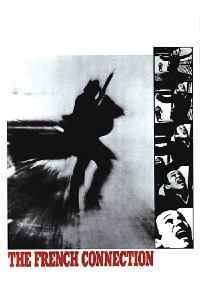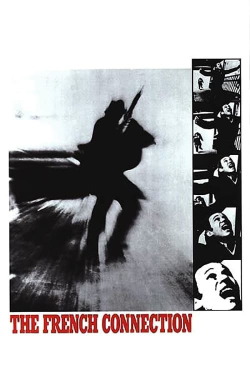
Review of The French Connection (1971) by Kylie P — 24 Nov 2009
On the one hand, The French Connection was one intense film. The story is rather uninteresting and even somewhat pedestrian as cop dramas go, at least to start, but the film takes a turn for the refreshingly exciting when the unpredictable Popeye decides to undertake a high-speed car chase on his own, commandeering some poor schmuck's vehicle, and driving under a subway overpass as the train carrying a hit-man and Charnier's lieutenant careens on ahead of him. This happens to be some of the most exciting action ever committed to celluloid, given the fact that director William Friedkin chose to film some of the chase from the actual vantage point of the backseat of the very fast car as it collided into various walls, oncoming vehicles, and narrowly missed a pedestrian. If the film doesn't interest you on the story or plot alone, at least watch it for this chase scene, which elicited many a thumping heart and goosebumps from this viewer.
The performances were largely very good. The rapport between Hackman and Scheider was clearly comfortable and well-cultivated, and their subtle mixture of buddy/partner/annoying roommate in their relationship gave the film its heart. Also, the cinematography was brilliantly rendered, moving from handheld docu-style camera angles to sweeping aerial shots, from shadowy black and white hues to pale fluorescence inside and outside various city buildings effortlessly, further ratcheting up the intensity of the film.
Also, the story itself was pretty convincing. While the film did not end on a particularly happy note, this almost makes the film more compelling, given the fact that not every case or situation ends in easily resolved, neatly wrapped up packages of happiness. The true-to-life tone and pace of the piece, consistently maintained by Friedkin, made the story a meaty one that rang true, even if it ultimately ended in ruin.
The quintessential problem with this picture is Popeye as a character. He is clearly one of the most flawed heroes to ever grace the screen, and while his deeds and tenacity may be celebrated, his apparent motivations and methods make his character both complex and awkward. He is tremendously hard to relate to as a person, particularly if the viewer doesn't share his caveman-like penchant for spouting off and pulling his gun at the slightest twitch, so it was hard to connect to him or to the importance of his quest, even as the Buddy character provided Popeye the much needed humanity to bridge the gap between the film's story and the viewer. Since the film seems to follow Popeye as a character (or Eddie Egan as a man, since he is the real-life inspiration for the character) more than the actual story in which Popeye finds himself to be the primary player, the lack of a full character wash coupled with the lack of redemption Popeye experiences as a result of his ordeal detracts from the film. The other element that detracted from the film was the brassy score, which all at once proved to be decidedly shrill, simultaneously accentuating and distracting from the action and dating the film more than most.
In essence, the French Connection was a good, if flawed, film. The action was superb, even if the story was ordinary and the main character an unlikeable young curmudgeon with little hope of karmic redemption, which a potential viewer will either find engrossingly complex or distractingly estranging.
This review of The French Connection (1971) was written by Kylie P on 24 Nov 2009.
The French Connection has generally received very positive reviews.
Was this review helpful?