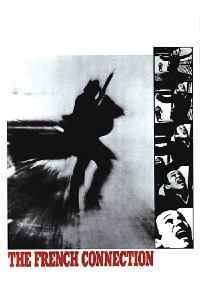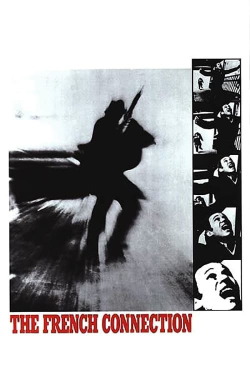
Review of The French Connection (1971) by Sarah H — 02 Jan 2017
The release of "The French Connection" more than anything, seems very timely. Nixon first used the term "the War on Drugs" to describe the systematic (and subliminally racial and politically focused) crackdown on the illegal drug trade at a press conference in June 1971. "The French Connection" had a release date a mere four months later. It doesn't seem coincidental that the film portrays the police as a staunch force for good pitted against a Black drug-consuming underbelly and an encroaching foreign presence trying to taint the American way of life. On the surface, this seems like a Nixonian wet dream, and it's probably one of the reasons it was so devoured upon its original release.
Under the surface, though, we see the toll this takes upon law enforcement and the public at large. In pursuit of a $31 million heroine deal, Gene Hackman's Det. "Popeye" Doyle slowly loses his sanity and perspective of what his role as a police officer is in the first place. During the iconic train pursuit, he steals a car, wrecks it several times, and puts the Brooklyn pedestrian population in needless danger. His mind focuses only on the bust and everything else is consequential. That alone makes the final seconds of the film that more psychologically brutal.
We can take Doyle's struggle and superimpose it on the War on Drugs itself. What is the cost to reward ratio in outlawing narcotics and targeting minority and liberal communities by proxy? No one at the time had that much foresight, but in retrospect "The French Connection" makes a poignant commentary. 7.9/10.
This review of The French Connection (1971) was written by Sarah H on 02 Jan 2017.
The French Connection has generally received very positive reviews.
Was this review helpful?