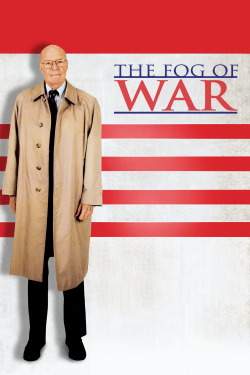
Review of The Fog of War (2003) by Scott D — 01 Jun 2004
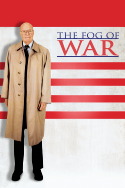
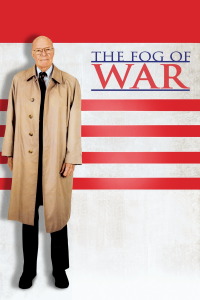
[u][i]The Fog of War[/i] (Errol Morris, 2003)[/u].
A great year for documentaries is capped off by [b]The Fog of War[/b]. The documentary, expertly directed by Errol Morris, zooms in on the life of Robert McNamara, the U.S. secretary of defense under Presidents John F. Kennedy and Lyndon B. Johnson, as well as the president of Ford and the World Bank at one time or another, a man who, now well into his 80s, was involved in the firebombing of Japan in 1945, the Cuban Missile Crisis of 1962, and the earlier days of the Vietnam War. Essentially a non-fiction biographical portrait of McNamara, [i]The Fog of War[/i] contains a charge of deep relevance: it gradually expands into a vital picture of human fallibility causing catastrophe, a cautionary tale of the way the complexity of war can cloud the judgment of even the most rational leaders, and an all-encompassing time capsule of American military action in the 20th century.
McNamara was once despised by the public for arrogance, poor judgment, and belligerence. But here, the man speaks with an affecting straightforwardness, eloquently and reflectively, and with an amazingly sharp access to facts and figures. McNamara is a captivating anchor to the film, confronting his doubters and going one-on-one with the audience. At the same time, he reveals some uncertainty and remorse about his controversial life - he has his flaws and made mistakes - as Morris, as interviewer, reveals empathy for this imperfect leader. Throughout the film, they talk about the Cuban Missile Crisis (it was "pure luck" that we averted nuclear war), the Vietnam War ("We saw it as part of the Cold War. They saw it as a civil war."), and other lessons that can be learned from McNamara's life ("Belief and seeing are both often wrong"; "Rationality will not save us"; and "Be prepared to reexamine your reasoning," among others), and the combination of the interviewee's articulate, candid-but-careful answers and the interviewer's empathetic but probing questions has a lasting emotional impact.
The movie is also brilliantly made, with astounding audio and visual footage that must have been near-impossible to dig up. Morris offers up elegant images of dominoes falling over a map of Asia as well as reels spinning over chilling audio conversations between McNamara, who wanted to slowly pull out of Vietnam, and Johnson, who wanted to get deeper in. We also get a dizzy, devastating montage of the horrors wreaked on Japanese cities by the WWII firebombing campaign juxtaposed against the amount of terror that would have happened to equal-sized American cities had the tables been turned. With these amazing compositional details, McNamara's electrifying presence, and Phillip Glass' gorgeous, flowing score, [i]The Fog of War[/i] is a stunning and very timely (filled with lessons that current U.S. President George W. Bush should heed in this time of shady war with Iraq) look at moral ambiguity in influential leaders, as well as at the fog conditions that often surround even the most well-intentioned U.S. military operations. [b]A[/b].
This review of The Fog of War (2003) was written by Scott D on 01 Jun 2004.
The Fog of War has generally received very positive reviews.
Was this review helpful?