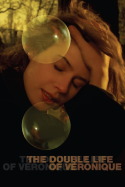
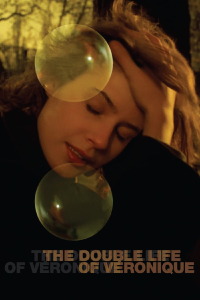
Review of The Double Life of Véronique (1991) by Hanna-Maria S — 10 Aug 2010
In the Kieslowski oeuvre, The Double Life of Veronique lies directly before his masterful Three Colors Trilogy (Blue, White, and Red) and in many ways it does presage many of the themes and cinematic devices of those films.
But, on another level, The Double Life of Veronique stands above the trilogy in both the beauty of its cinematography and in its brilliant exploration of identity. Essentially, the film functions as a doppleganger tale in a manner similar to Doestevski's The Double or Nabokov's Despair, but in this film the doubles never meet--there is only one brief encounter in which one catches sight of the other.
Irene Jacob is truly radiant and brilliant in the role of both women, and Kieslowski's use of color, blurred images (shots through fishtanks, etc.), and other techniques outshine anything he achieves in the Three Colors films.
Ultimately, The Double Life of Veronique is a brilliant exploration of determinism vs. free will. I won't spoil the plot by explaining, but The Double Life problmenatizes the concept of free will by questinoning the concept of free will.
The film leaves you wondering whether or not we trully have choice or whether we are merely puppets being manipulated by the puppetmaster of socio-cultural forces; thus, it really has an almost naturalistic theme, although Kieslowski's film proffers much more hope to the viewer than classic works of naturalism.
A beautiful, brilliant, and provocative movie that is an example of filmmaking at its finest.
This review of The Double Life of Véronique (1991) was written by Hanna-Maria S on 10 Aug 2010.
The Double Life of Véronique has generally received very positive reviews.
Was this review helpful?