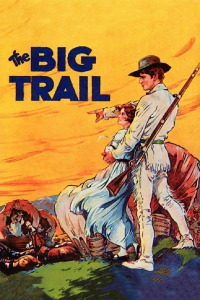
Review of The Big Trail (1930) by Elliott B — 15 May 2015
Why don't more Westerns revolve around the Oregon Trail? It seems to be the perfect moving setting: it travels across the western frontier and sets standards for human endurance. Also, it allows for a lot of scenery, plot devices, and characters to emerge, develop and interact.
The best word that describes this film is early: (1) an early Western, (2) an early John Wayne, and (3) an early talking picture - 1930. There are large silent portions of the film, which eased the sound transition between silent and talking pictures for audiences at the time.
Also, directors like Raoul Walsh were still in the experimental stages of sound development. Vitaphone led the way since its success in 1927 with the world's first talking picture - The Jazz Singer.
The director Raoul Walsh was a pioneer of filmmaking and disciple of D.W. Griffith, so the man knew how to make a film; yet even he got in over his head with the on-site production in the Sierra Nevada and Rocky Mountains (all those natural spills and thrills were real).
Finally, Fox made a serious misstep when it produced the film in 70mm widescreen, or Grandeur film, which meant most film theaters found too expensive and/or cumbersome to convert. Alas, an epic Western ended up a box office bomb and Fox jumped back into the cheap, but reliable B-Westerns.
Perhaps, if The Big Trail had been popular and financially successful, studios, directors, and producers would have gained more confidence in the Western genre and the Western would have blossomed earlier.
This review of The Big Trail (1930) was written by Elliott B on 15 May 2015.
The Big Trail has generally received positive reviews.
Was this review helpful?