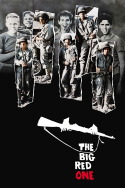
Review of The Big Red One (1980) by Paul Z — 27 Jul 2009
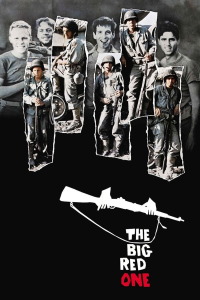
What makes Sam Fuller's WWII male-bonding picture work is that both the character and performance Lee Marvin embodies both to what Fuller envyingly aspires and with what he already identifies. For the most part, it's an ensemble film, a band-of-brothers story in war movie terms. The characters are all huddled together within the film's cocksure focus. But the movie opens with Marvin at the end of the First World War. The end of the second one is a consummation of his chivalrous sense of heroism.
What makes Sam Fuller's baby suffer is its scoff-worthy abundance of extensive hero worship. It's about the four privates who survive the war from beginning to end with their sergeant, Marvin, becoming known as the Four Horsemen. The body of the movie comprises a stream of episodes showcasing, dramatizing, often even surrealistically symbolizing the aberration and atrocity of war. The cigar-chomping, squinty-eyed, teeth-gnashing, emotionally impenetrable squad fights in so many places, stays together intact for so long, experiences so many of the decisive advents of WWII that naturally these characters are meant to signify all the infantrymen in all the battles. Fuller, however, who fought in the First Division, appears determined to keep his representations from evolving any thematic illuminations. They fight. They are scared. Men kill, other men are killed.
This conserves a consciously intermittent construction for the film. One battle ends, another begins. What we have is a sequential scrapbook of experiences so devastating that the characters can't find reason or interrelation in them, and so merely try to survive them through being infallible in their expertise and invincible to ordeal. Is this all Fuller drew from of the war? He gives the impression that he believes it's all anybody really gets, that the vast patterns of war's meaning are really just the creations of thinkers, storytellers and politicians, and that for the guy under fire there is no pattern, just the desperately sincere desire to live.
This is a theme that would indeed be more persuasive were our four heroes not constantly put on a man's man pedestal with scenes of the pure sort of braggadocio many older men show when they pontificate on the old days. Nearly every other combat film set in Vietnam, or which I can recall, Stone's trilogy, Kubrick's Full Metal Jacket, Coppola's Apocalypse Now is superior because there is something natural and real about the characters in that we often don't see them for very long periods of time. The Big Red One is a good entertainment, it does impart insight into historical niceties of WWI and WWII, it does portray intense peril in a good deal of its grounded battle sequences. It just doesn't always tell the truth.
This review of The Big Red One (1980) was written by Paul Z on 27 Jul 2009.
The Big Red One has generally received positive reviews.
Was this review helpful?