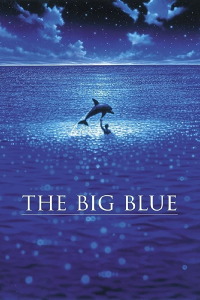
Review of The Big Blue (1988) by Jonathan K — 29 Nov 2007
Once upon a time, the foundations of organisational psychology were very much set by Maslow's assumptions following a rational hierarchy of human needs, and thus with great optimism were widely adopted in the workplace.
However the clarity of these basic assumptions of life is somewhat in doubt, as to their universal application (in regards to following a specific rational sequence of fulfilment). The Big Blue, produced in the 80s, presents us with an antilogous against, the referent in time, tendency to the revival of the Enlightment beliefs (linked to faith in unlimited human control over behaviour).
The director, Luc Besson, guides us with a descriptive insight into ones traumatic life experience, namely the blocking of ones loving and belonging needs, commensurate with the loss and absence of ones parents.
In dispair, jaques Mayol focuses his childhood and adolescence life on the features of the Aegean sea, in the aquatic surroundings of a rural Greek island, where he was born. Until a beautiful female character, observes Jacques and is touched by his lifetime disorders, as well as wants to help.
The ending expresses ambiguity in the basic assumptions of life; as expressed in a normative view. The fact that jacques opts for the dolphin `culture`, at the expense of liquidating the opportunity to lead a Normal Human Life, -commensurate with his female friend expecting the birth to his baby- grasps the oberver /participant of the positivist culture, with astonishment.
This review of The Big Blue (1988) was written by Jonathan K on 29 Nov 2007.
The Big Blue has generally received positive reviews.
Was this review helpful?