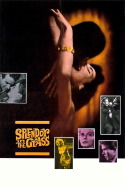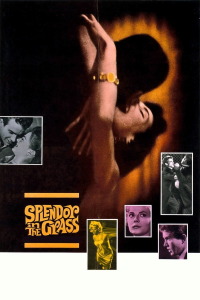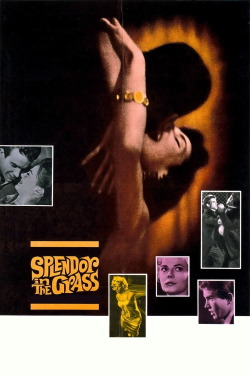
Review of Splendor in the Grass (1961) by Byron A — 04 Aug 2014
Splendor in the Grass is one of my favorite films, but when I was about to watch it to review I had forgotten why I liked it so much. After watching it, I remembered why. There are many reasons, from Natalie Wood to containing the best piece of advice in the world, "You should always drink plenty of milk." The best part is the first twenty minutes. It is loaded with great lines and iconic scenes. That is where they set up just about every pre-counterculture sexual archetype.
The first half of the story is a coming of age story. It explores the social dynamic of two types of girls. It used to exist in this country, and still exists in many others. As doctrine it states, "There are two types of girls, one who is chaste and pure that you eventually marry. The other, one who is lose and fun that no one will ever marry." Warren Battey wants to sleep with Natalie Wood, and wants to marry her. He is willing to wait until they are married, but his father won't let him, so he is left with wanting to sleep with Natalie before they are married. Natalie wants to sleep with him as well, partly because she wants to make him happy, partly because she wants to. She resists because she doesn't want to be the second type of girl, thus they will never get married.
Natalie's father is somewhat interesting. He seems ineffectual. The first few times I saw him, I laughed. Very silly, in one scene he walks right into a dramatic moment, just thinking, "I'm just going to walk over here, wearing my straw hat." That might just be my interpretation. While perhaps an ineffectual man, at the end of the day he is a very effectual father. He sells his stock in the oil company to take care of his daughter. He has faith in her, he is the only one willing to allow her to meet Warren at the end of the movie.
One interestingly disturbing scene is when Warren is choking Natalie and commanding her to worship him. It is not the best scene in the movie, but every time I see it becomes more compelling.
Warren Battey's mother is not interesting. His father is obsessed with making sure his son marry the right type of girl. He doesn't even care that his daughter has become the wrong type of girl. He so wants a better life for his son that Warren isn't allowed to have the life he wants.
Natalie's mother is perhaps the most compelling adult. She comments to Natalie that a woman doesn't enjoy sex, she just does it to make her husband happy. This compounds the confusion Natalie is having, by asserting that she is wrong to even want to have sex.
This reminds me of an interview I once saw with a homemaker. She was talking about how much she cooks, and it seemed like she enjoyed cooking. When asked if she likes to cook, she took a pause and said, "Not really." This may be a wild guess on my part, but I think she actually likes cooking. She says she doesn't because she considers herself a feminist, and she believes that a woman doesn't do those things she does them because she has to. Feminism is good when it allows women to do things, but bad when it holds them back. There is a George Carlin routine where he, in the name of feminism, attacks housewives. When feminism is used like this it leads people to react negatively to all feminism.
Natalie Wood goes crazy, which she always does brilliantly. The most brilliant scene is her confronting her mother in the bathtub. The last part is basically an extended conclusion. Natalie goes to a mental institution. Here a psychiatrist gives her the second best piece of advice in this movie, "We blame our parents for everything these days, but remember they had parents too." She gets better. The market crashes, which means Natalie's father was able to get more out of his stock than anyone else. Warren's father commits suicide, a fairly fitting finish. Warren meets a woman in New York. "You've never had pizza?" she asks. She rejects the two types of woman doctrine and leads a healthy, modern life.
The very end has Natalie (now engaged) and Warren (now married) meet again. Natalie is surprised by his barefoot and pregnant wife. We are left with a shot that leads us to wonder if Natalie is okay with Warren's happy marriage. I think she is.
This review of Splendor in the Grass (1961) was written by Byron A on 04 Aug 2014.
Splendor in the Grass has generally received very positive reviews.
Was this review helpful?