Review of Spartacus (1960) by Brett C — 22 Dec 2014
Review In A Nutshell:
History is a cruel and terrifying painting, there never seems to be a time where slaughter, tyranny, and slavery aren't a prominent role in the most significant times. There always seems to be a hero that tries to change society for the better, but up until now, changes have been made but madness and destruction still persists. I do not think there will ever be a time where harmony and love is the only thing that defines our world; there will always be pain and suffering in order to achieve the selfish dreams of individuals, or to create a wonderful story to be told, despite contemporary society claiming to move forward.
Spartacus begins covering the difficult conditions in the past, where the lower class is abundant, present to serve the luxuries of the rich and powerful, with Spartacus and many others working at a salt mine. It is there we immediately feel pity for the slaves, working in such extreme heat and effort, and through an act of kindness by Spartacus, he is punished; establishing him as the hero of the film. Impressed by a slave dealer, he purchases Spartacus and trains him in his gladiator school, regaining his health and strength, and from there it begins his rise to freedom. It is during this first act, that relationships and character development are pushed, understanding the elements and events that propelled him in leading an army of slaves; here we see slaves at their worst, a product for the entertainment of the fortunate, simply present to die in their "honour". In disgust, the slaves eventually retaliate and end the metaphorical shackle that restrains them.
Between Spartacus' rise to freedom is the exploration of Roman politics, the corruption and deception that runs the veins in some members of the Senate; two members of the Senate are most important to the film's story, Gracchus and Crassus, both at conflict with one another due to different political views. Exploring their actions and agenda plays a significant role to the central story, but I personally felt it could have been more detailed and darker. Stanley Kubrick during its production, had very little to no creative control over the screenplay, and because of that the film lack a sense of balance in its characterisation; in all of Kubrick's other films, contains characters that are present to push the film's thematic concerns, ergo identifying their moral place, but all were treated with a sense of balance in their development, ensuring that not only they could act as a symbol but also grounded human beings that contains flaws. Gracchus, Crassus, Spartacus, and even Batiatus all seem to have a thematic purpose, but screenwriter Dalton Trumbo and Executive Producer, and star, Kirk Douglas prevents the film from being too grounded, ensuring that the story and its characters are larger than life. At the same time it is this relentless cushion on the Spartacus character that made him such an appealing character, it is a person incapable of corruption, acting as a symbol for the future, hoping his defying acts would act as inspiration for the end of human slavery.
The intention of Spartacus is to free the slaves, ensure that no more bloodshed will be faced by his brothers and sisters, but Crassus' egotistical drive for dictatorship has forced Spartacus and his people to confront the Roman army. It is a vision that demonstrates the scope of Kubrick's mind, proving that he too can deliver such spectacle if the material demands for it; if he entirely had the film his way, it would have probably been more ambitious, surpassing the iconic moments that he brought in his previous film, Paths of Glory. The film no doubt has the Hollywood stamp on it, and Kubrick did the best he can to make it his own; it is a stand-alone piece in his dark and intelligent body of work, but its isolation does not represent a sense of failure.
Alex North's epic score captures its sword and sandal atmosphere perfectly, matching the film's wide scope through gravitated emotions and over-emphasising the film's themes. North's musical score rarely ever reach a sense of intimacy that is common in Kubrick's films, which is a bit of a bummer at times, but thankfully North does create a particular composition during intimate and romantic moments in the film, conjuring up emotions of sadness and affection.
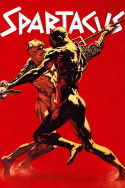
Spartacus, judging from the way it is being marketed, feels like a solo-effort, but experiencing it, one could easily see the brilliant performances that even surpass what Kirk Douglas brought to the role. This was meant to be a personal film for Douglas, a film that would prove to the world that he was deserving of the central role in Ben-Hur, but it is this large sense of ego that hurt his performance slightly; here is a story that requires multiple elements in reaching to its impacting conclusion, but Douglas seems so obsessed with himself that he must stand out from the overall cast, displaying moments that felt overly-forced into winning the audience's hearts. The performance isn't as painful as I seem to describe it, but like I said it sticks out like a thumb, at times hurting the overall film in the process. Laurence Olivier, whom back then I thought was a major flaw in this film, finally grew on me, delivering a performance filled with character depth that I want to explore. Olivier is not as showy here as compared to the Shakespearean films that I have seen him in, and through this subtlety, I was able to appreciate him more as an actor. The rest of the supporting cast were equally effective within their respective roles, and particular combinations work well together, notably Peter Ustinov and Charles Laughton; both helping one another to achieve their own selfish ambitions.
Spartacus is one of the greatest epic films of all time, but it is far from being the director's greatest work. Despite its troubled production, the film manages to come together strongly with an interesting premise, strong performances, and breathtaking scope in both its music and visuals.
This review of Spartacus (1960) was written by Brett C on 22 Dec 2014.
Spartacus has generally received very positive reviews.
Was this review helpful?